Software Engineering Intelligence Platform
Stop reporting on engineering. Start leading it.
Connect your tools, align your team, and act on what actually matters. First insights on day one.
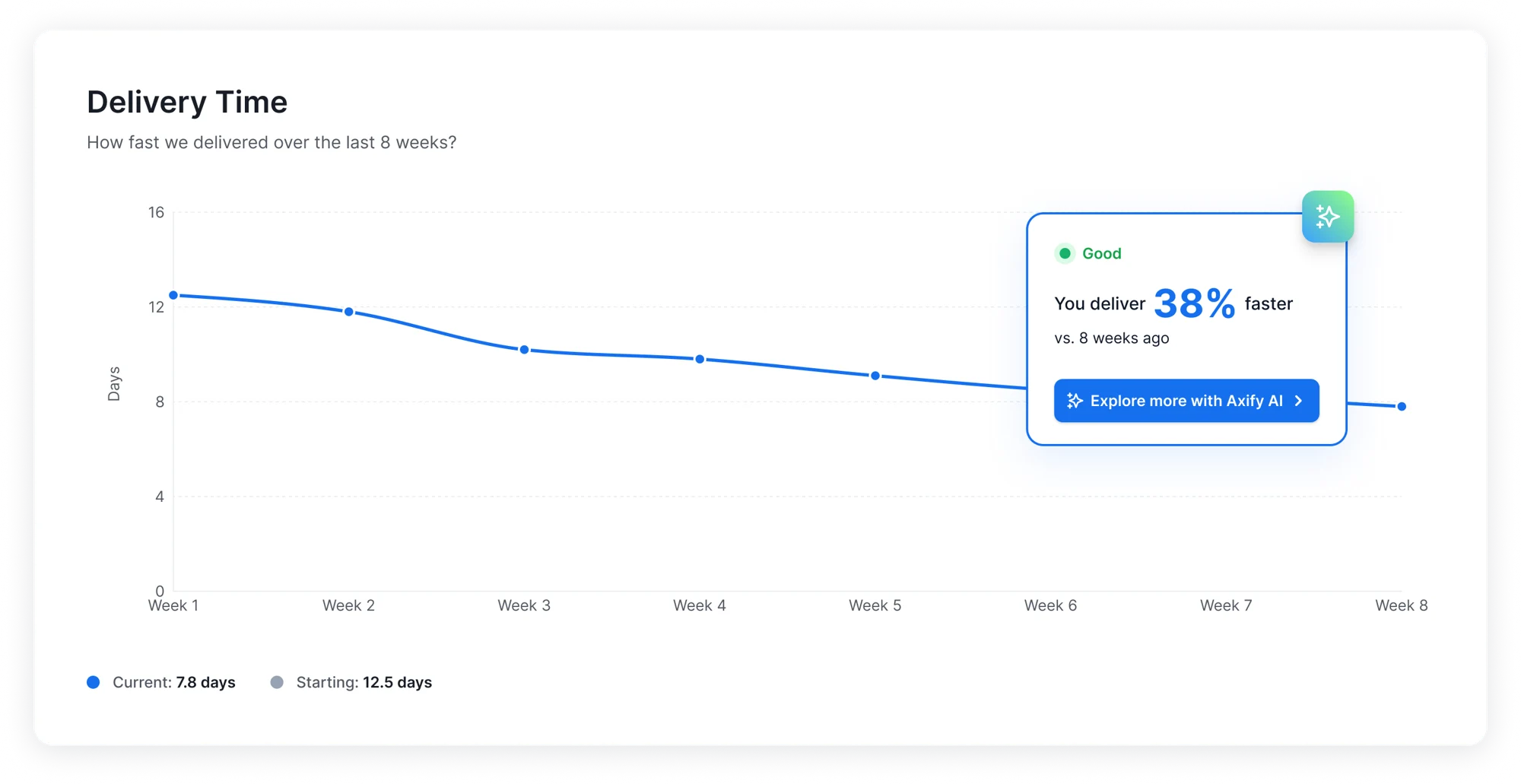
See exactly how AI impacts your team's performance.
AI decision partner helping engineering leaders with actionable insights.
Real-time tracking and insights into DORA metrics.
Detailed visual maps of your entire software development process.
Help development teams monitor and benchmark their productivity.
Improve your software engineering with accurate metrics tracking.
Set inspiring objectives and track their progress.
Stop reporting on engineering. Start leading it.
Connect your tools, align your team, and act on what actually matters. First insights on day one.

A software engineering intelligence platform (SEIP) connects data from the systems engineering teams use every day: version control, issue trackers, CI/CD pipelines, and incident management tools. It transforms that data into a unified, actionable picture of how software is actually being delivered.
Before these platforms existed, engineering leaders had two options: spend hours manually exporting data from each tool and stitching it together in spreadsheets, or rely on gut instinct. Neither worked at scale.
What separates a dashboard from a SEIP?
A dashboard shows you that cycle time went up last week. A SEIP tells you why: which team, which bottleneck, and which process changed.
Pro tip: The best platforms go a step further and become a genuine decision partner: rather than only showing you what's happening, they tell you what to do about it.
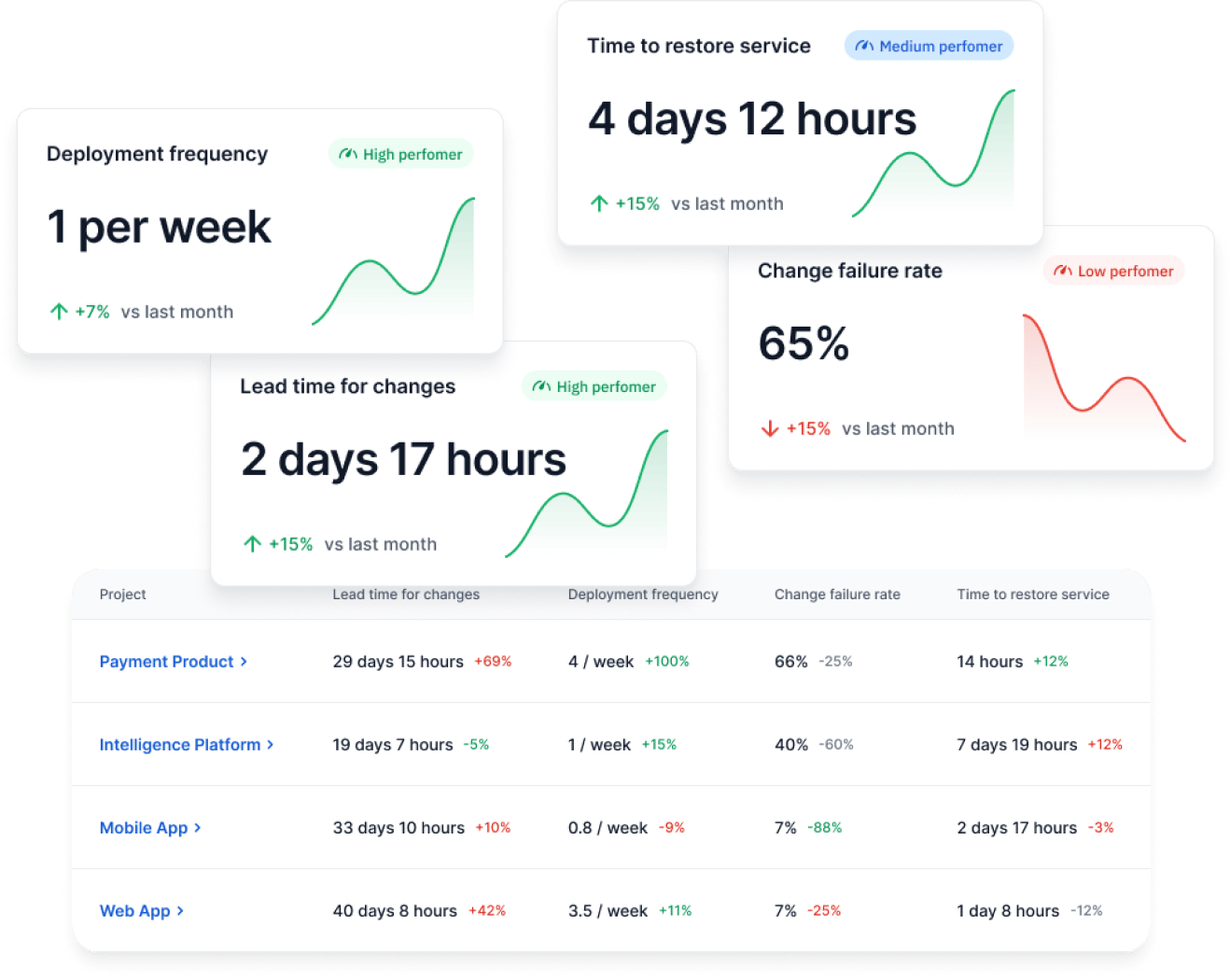
Most engineering leaders are trying to answer the question of AI ROI with tools that weren't built for it. Here's what that looks like in practice:
No single source of truth. Every leadership meeting starts with someone questioning the numbers. Different teams export data differently. Trust in reporting erodes.
Reporting as a tax on management. Engineering managers spend hours each week building status updates that could be generated automatically.
Delivery timelines that can't be trusted. Without reliable velocity data and forecasting tools, release dates are educated guesses. Product managers lose confidence.
Invisible bottlenecks. PRs sit in review for days. Rework cycles repeat. Without cross-tool visibility, no one can see the pattern, let alone fix it.
Unknown AI ROI. Teams have adopted AI coding assistants, but whether they're improving throughput remains unanswered. Investment decisions are being made without data.
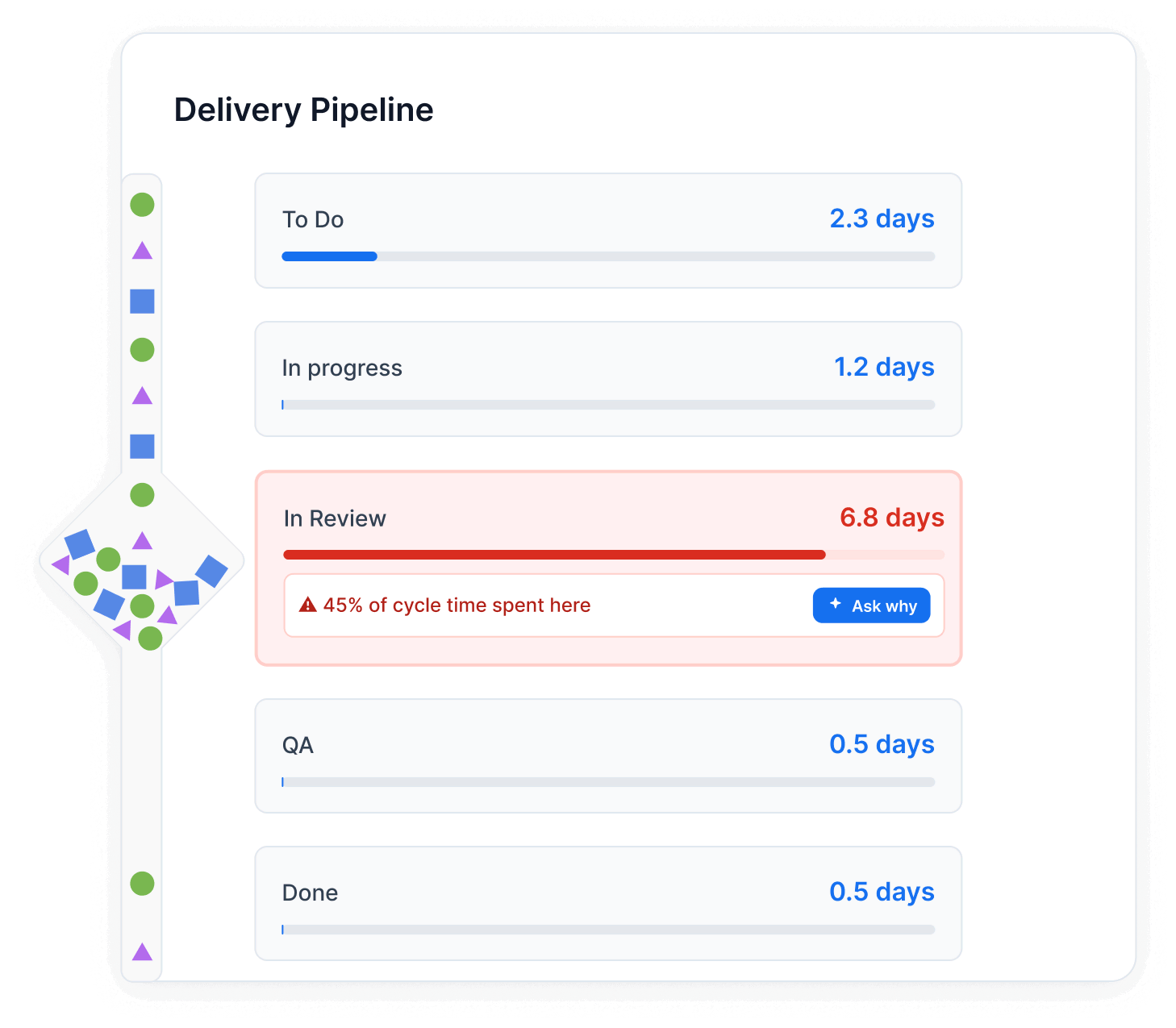
The right framework for thinking about software engineering intelligence has three layers. Each one builds on the last.
Connect Git, project management tools, CI/CD pipelines, incident management systems, and AI coding tools, then normalize that data into a consistent, reliable picture of delivery health.
This layer alone eliminates a significant source of friction: the constant disagreement over metrics. Conversations shift from "which spreadsheet is right?" to "what do we do about this?"
Raw data tells you what. Intelligence tells you why. Axify Intelligence analyses patterns across all connected data sources: identifying when a spike in cycle time is caused by a review bottleneck versus a rework cycle, and detecting when interrupt rate is climbing toward a level that historically predicts delivery slowdowns.
Rather than presenting findings and leaving interpretation to the reader, Axify recommends specific, concrete steps, prioritized by impact.
"Add one reviewer to this team's queue to reduce average PR wait time by approximately 30%."
"This release is trending six days late based on current velocity. These four stories are the highest-risk candidates to descope."
A software engineering intelligence platform is only as useful as the metrics it covers. Here are the frameworks the best platforms support, and why each one matters.
The market for engineering intelligence tools has grown significantly. Here's how the leading platforms compare.
| Axify | Jellyfish | Swarmia | LinearB | |
|---|---|---|---|---|
| Time from setup to first insight | Same day | 1–2 weeks | Days | Days |
| Full framework coverage: DORA + Flow + SPACE | All three | DORA + SPACE | DORA + SPACE | ✗ |
| Tells you what to do next, not just what happened | Specific, prioritized actions | Insights only | ✗ | Recommendations only |
| AI coding tool adoption linked to delivery outcomes | ✓ | ✓ | ✓ | ✓ |
| Natural-language reporting for any audience | ✓ | Partial | ✗ | Partial |
| Value stream mapping | ✓ | ✓ | Partial | Partial |
| Primary use case | Full decision partner: visibility, intelligence, and action | Business alignment and executive ROI reporting | Developer experience and team health surveys | AI productivity tracking and DevOps automation |
A software engineering intelligence platform serves different stakeholders in different ways.
Real-time view of engineering health across the entire org: DORA performance, delivery confidence, team capacity, and AI adoption trends without manual data aggregation.
Here's what two Axify customers accomplished after connecting their tools and working with the platform.
Financial Services · 40+ dev teams
Read the BDC case study →The Value Stream Mapping we did has immense value. The team sees what happens, the impact of their actions, and areas for improvement.
Josée Gagnon, Manager, BDC Financial Services

AEC Software · 8 dev teams
Read the Newforma case study →We've come a long way. We've gone from 1 or 2 user stories per session to 8, which is an exceptional improvement.
Camil, Product Owner, Newforma

Your engineering data should tell you what to do next. Not give you more charts to interpret. Axify connects your delivery stack, applies AI-powered analysis, and surfaces specific actions your team can take today. First insights on day one.