Agile
15 minutes reading time

In a widely shared Agile retrospective from 2018, a software team reported losing over $600,000 before leadership realized that delivery had effectively stalled.
The details were anonymized, but the failure pattern is familiar: ceremonies ran on time, sprints closed predictably, and yet nothing meaningful reached production. When work finally stopped, layoffs followed and the company collapsed.
That retrospective made one thing clear: activity without delivery control turns execution into spend. Scrum events continued on schedule, but outcomes never changed because events were treated as calendar obligations instead of decision points for scope, risk, and release readiness.
That failure wasn’t about Agile itself. It was about how the ceremonies were used.
So, in this article, you’ll learn what Agile ceremonies are, why they often break down at scale, and how to reset them so they support predictable delivery rather than procedural motion. Let’s start with the basics.
Agile ceremonies are recurring working meetings designed to
They are not status updates or rituals. Their purpose is to create clear decision points around scope, priority, and readiness during a sprint.
Problems typically emerge when ceremonies continue on schedule but decisions do not change. Planning happens, standups run, reviews occur, yet delivery outcomes stay flat. When that happens, ceremonies stop acting as control mechanisms and become procedural overhead.
For engineering and delivery leaders, ceremonies matter because they are one of the few tools that translate intent into execution discipline. Used well, they help teams reconcile capacity, dependencies, and risk before issues spill into later stages of delivery.
That’s what makes truly Agile teams 25% more productive than traditional teams.
If you want a quick refresher on the mechanics, this short video provides a simple overview:
This leads us to our next point.
If you read so far, you may be wondering:
Are agile ceremonies still relevant in today's AI coding world?
Agile ceremonies are still relevant, but the justification may slowly change in an AI-dominated world.
For example, AI coding assistants compress execution time inside the sprint. However, they do not replace alignment, risk control, or release decisions.
As such, planning, reviews, and retrospectives still matter because:
The role of Agile ceremonies shifts from coordinating effort to validating delivery signals: what merged, what shipped, what failed, and what risk increased.
Pro tip: From what we’ve seen across different delivery teams and clients, shorter feedback loops may expose weak ceremonies faster. That’s because decisions lag behind code changes.
In other words, AI raises the tolerance for poor execution discipline.
Ceremonies that do not change scope, priorities, or release decisions lose value quickly. Ceremonies grounded in throughput, cycle time, change failure rate, and rollback data become mandatory for maintaining delivery control.
Agile ceremonies sit at the core of Scrum and most Agile frameworks because they create regular inspection points tied to real delivery signals, not just activity. Their value depends on whether they replace assumptions with observable facts about work in progress.
Pro tip: At Axify, we believe that teams feel less meeting fatigue when ceremonies exist to make decisions rather than to recap activity.
When ceremonies are run with clear intent, teams typically see:
Next, let’s walk through the four core Agile ceremonies and what each is meant to control.
Delivery problems rarely come from missing meetings. They show up when meetings happen on schedule but fail to control scope, risk, and flow.
So, here's a breakdown of the four Agile ceremonies in order. Here, we'll focus on what each one should lock down so planning produces commitments, standups surface risk early, reviews validate progress, and retros lead to change.
Purpose
Sprint planning exists to set a sprint goal that the team can realistically deliver. The outcome should be a clear commitment grounded in recent delivery performance, current capacity, and known risks. When done well, the meeting produces shared clarity on what will ship, what will not, and why.
Agenda
The agenda centers on defining a sprint goal, selecting backlog items, and confirming scope that fits actual capacity. Discussion should focus on tradeoffs, dependencies, and risk exposure. Estimates matter only insofar as they help validate feasibility against historical throughput.
Timing
Sprint planning takes place at the start of each sprint, before execution begins.
Duration
Sprint planning is timeboxed to prevent over-analysis and surface weak inputs early. Scrum.org recommends up to 8 hours for a one-month sprint, with shorter sprints proportionally reduced. The constraint forces teams to prioritize decisions over debate, which becomes increasingly important as team size and dependency complexity grow.
Common problems in practice
Purpose:
The daily standup exists to synchronize work in progress and surface blockers early enough to act on them. Its purpose is to protect delivery flow during the sprint, not to become a status update to management. When run correctly, issues emerge while there is still time to reroute work, resolve dependencies, or adjust priorities.
Agenda
The agenda should focus on three signals: what moved, what is blocked, and what requires coordination today. Updates should reference work in progress rather than completed tasks. Once a blocker is identified, discussion should stop and move offline with clear ownership assigned for follow-up.
Timing
The standup happens every working day of the sprint, at the same time, with the same participants. Consistency matters because it makes deviations in flow easier to detect.
Duration
The timebox is intentionally strict. Scrum guidance caps the standup at 15 minutes per day, regardless of sprint length. The constraint forces relevance and prevents the meeting from drifting into planning, review, or problem-solving sessions.
Common problems in practice
Purpose
The sprint review exists to inspect what actually shipped and validate whether the sprint goal was met. The meeting should connect delivered work to business intent and delivery risk. When run well, stakeholders leave with a clear understanding of progress, tradeoffs made, and what changed as a result of the sprint.
Agenda
The agenda focuses on completed, integrated increments, stakeholder feedback, and implications for upcoming priorities. Discussion should center on what was delivered and what that means for scope, timing, or direction. The review is not the place to justify missed work, but to make informed decisions based on what was completed.
Timing
The review happens at the end of each sprint, after planned work has either shipped or been explicitly deferred. Work that is not production-ready should be excluded to avoid distorting delivery signals.
Duration
Timeboxing protects signal quality. Scrum guidance timeboxes the sprint review to up to four hours for a one-month sprint, with shorter sprints requiring proportionally less time. The constraint keeps the discussion focused on outcomes and decisions rather than detailed walkthroughs.
Common mistakes that undermine the review
Purpose:
During the sprint retrospective, you inspect how work flowed through the system and decide what to change in the next sprint. The focus should stay on execution mechanics and delivery constraints, not on assigning blame or debating individual performance.
Agenda:
The agenda reviews what supported delivery, what introduced friction, and which single change is worth testing next. Discussion works best when grounded in delivery signals such as carryover, blocked work, and cycle time rather than recollection alone.
Timing:
The retrospective runs at the end of the sprint, after the review, while details are still fresh and actionable.
Duration:
Scrum guidance timeboxes the retrospective to up to three hours for a one-month sprint, with shorter sprints requiring less time. The boundary matters because it forces teams to prioritize changes that are likely to affect delivery in the next iteration.
Problems that stall improvement:
From our experience, retrospectives only change outcomes when discussion is tied to observable delivery behavior and results in an explicit experiment for the next sprint.
Next, let's see how the Agile ceremonies work in Scrum and in Scaled Agile.
The way ceremonies work changes once delivery moves beyond a single team. What feels manageable with one backlog and one cadence starts to break as coordination overhead increases, dependencies multiply, and decision latency grows.
Here are the differences that matter in practice.
With one team, ceremonies stay lightweight and focused because decision paths are short and context is shared.
Planning works when the scope fits the capacity, feedback loops stay tight, and conversations happen with the people doing the work. Also, execution benefits when Agile practices stay grounded in observed delivery behavior rather than prescribed ceremony rules.
In this setup, sprint planning sets a clear goal tied to real capacity. Standups surface blockers early because dependencies are limited and ownership is obvious. Reviews stay useful because feedback comes from people close to the work, and adjustments happen before drift turns into delay.
And retrospectives can drive change because problems stay visible and fixes remain small enough to test quickly. As a result, teams maintain reliable sprint commitments over time without adding extra coordination or process overhead.
Once delivery involves multiple teams contributing to the same product or release, ceremonies must support coordination beyond a single backlog or sprint. At this point, the goal shifts from helping one team plan and adjust its work to aligning plans, dependencies, and delivery timing across teams.
SAFe ceremonies are designed to provide that alignment by creating shared planning and feedback moments at the program level.
As scale increases, delivery visibility declines because data spreads across teams, tools, and planning cadences. Feedback loops lengthen, cross-team dependencies become harder to track, and issues often surface only after they have already affected multiple sprints.
The result is consistent across large Agile programs: forecasts become less reliable, and leadership depends more on post-hoc explanations than on timely delivery signals to understand progress.
Once teams adopt the SAFe framework, delivery coordination moves from a single team to multiple teams planning and executing against shared program increments. At this level, breakdowns typically occur at coordination boundaries rather than within individual teams.
The most common failure modes include:
In these environments, adding more ceremonies rarely resolves the problem. SAFe ceremonies work only when they respond to shared delivery signals such as flow efficiency, work-in-progress aging, and throughput across teams. Without those signals, issues are discussed after the increment ends rather than addressed while delivery is still in progress.
Pro tip: For a deeper look at what those inputs should include, check out our guide on Agile dashboard essential metrics to learn more.
Moving on, let's take a look at the roles and responsibilities.
Clear ownership keeps meetings focused on decisions. When responsibility is unclear, meetings expand, blockers persist, and accountability weakens.
Here are the roles and responsibilities across the four Agile ceremonies:
|
Ceremony |
Primary Responsibilities |
|
Sprint planning |
|
|
Daily scrum |
|
|
Sprint review |
|
|
Sprint retrospective |
|
Now, let's take a look at how to make ceremonies work better for your company.
Effective ceremonies depend on disciplined inputs and clear decisions. The practices below focus on controlling delivery flow, reducing uncertainty, and keeping meetings grounded in observable work.
Small execution details determine whether ceremonies support delivery or devolve into routine meetings. When these basics erode, even well-structured agendas lose effectiveness.
Key practices that keep ceremonies productive include:
Sprint planning is effective when commitments are based on (and align with) recent delivery behavior. Scope decisions work best when grounded in historical throughput, since past delivery sets a practical upper bound on what can be completed within a sprint.
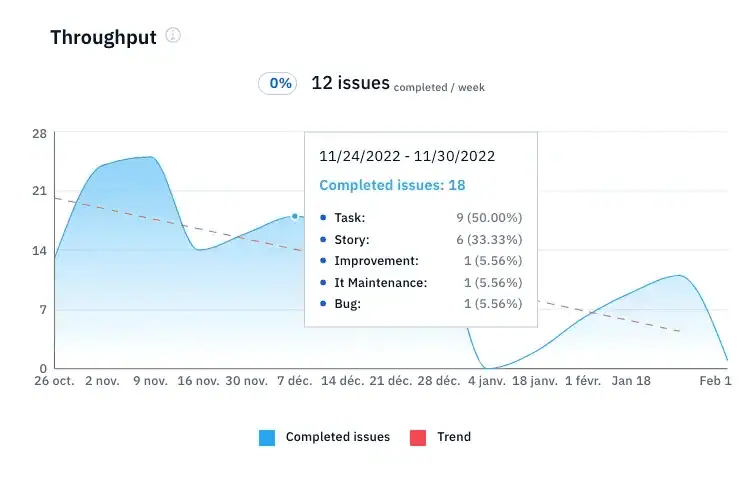
Capacity discussions are most reliable when they reflect actual availability rather than assumed focus time. This keeps scope aligned with reality and shifts planning away from debating estimates toward explicit tradeoffs about what to include and what to defer. When teams plan this way, carryover decreases and delivery predictability improves over successive sprints.
Daily standups remain useful when they manage delivery flow rather than recount individual activity. We advise you to:
This is where delivery visibility becomes practical.
During the standup, you open Axify and look at a live view of work in progress across teams.
You immediately see which items have been blocked for more than two days, where cycle time increases, and where work is piling up in review. Instead of asking each person for updates, the conversation starts from shared data and moves directly to action.
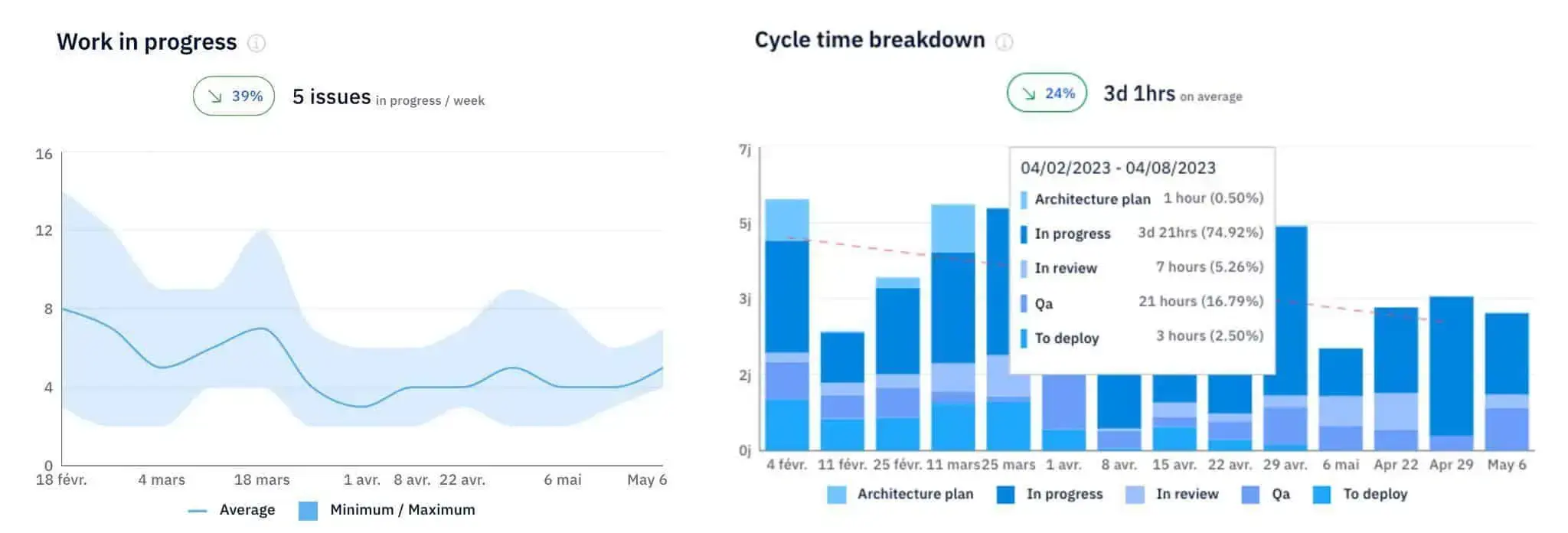
That changes the conversation from “what did you work on?” to “what is preventing progress right now?” This directly improves response time and reduces surprises later in the sprint.
Sprint reviews add value when they help teams and stakeholders understand delivery trends over time, not just what shipped in the last sprint. Two good Agile best practices here are to:
When reviews are structured this way, discussion shifts away from defending individual outputs and toward deciding what to adjust next. This gives leadership clearer signals about progress without introducing additional reporting layers.
Retrospectives drive improvement only when discussion stays anchored in how work actually flowed through the system. So, your best practices for sprint retrospectives are:
Tracking outcomes this way keeps improvement efforts grounded in evidence.
Agile ceremonies stop making a difference when they continue to run but no longer affect outcomes.
This usually happens when specific execution mistakes creep into ceremonies:
Agile ceremonies only work when decisions are grounded in delivery metrics. At scale, that context is hard to keep consistent across teams and sprints.
Axify supports Agile ceremonies by providing consistent delivery visibility across teams.
With Axify, you can focus on:
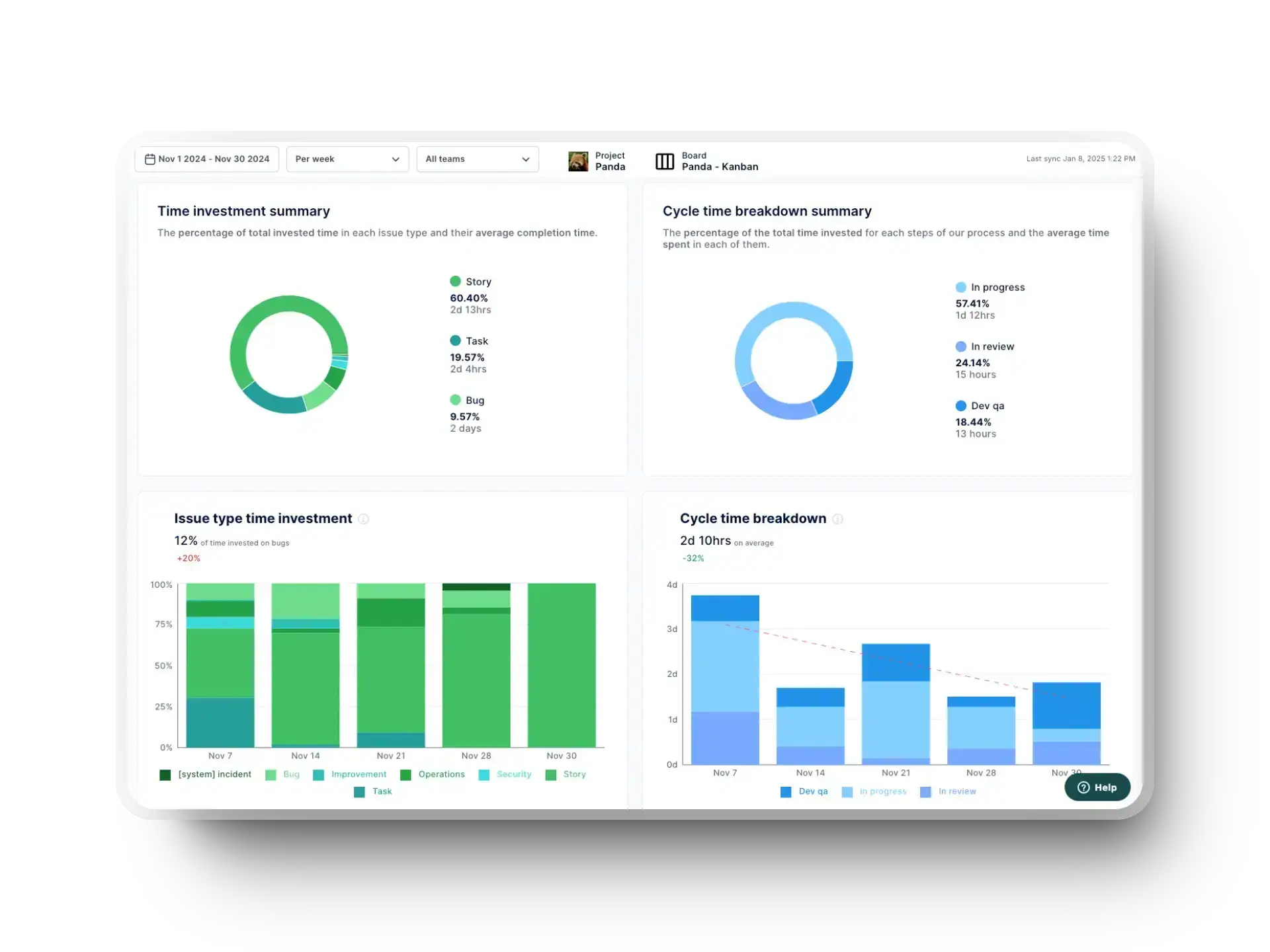
Sprint planning usually fails when commitments ignore recent delivery behavior. With Axify’s engineering metrics, you can walk into planning with clear evidence of how long similar work actually took and where time was spent.
That view keeps capacity discussions grounded in real throughput and WIP limits. This shifts planning from negotiation to alignment, because the data already reflects how work flowed in prior sprints.
AI-assisted programming tools are often adopted unevenly across teams, which makes their impact difficult to assess during reviews or retrospectives. Axify measures AI adoption patterns and connects them to delivery outcomes such as cycle time, stability, and throughput.
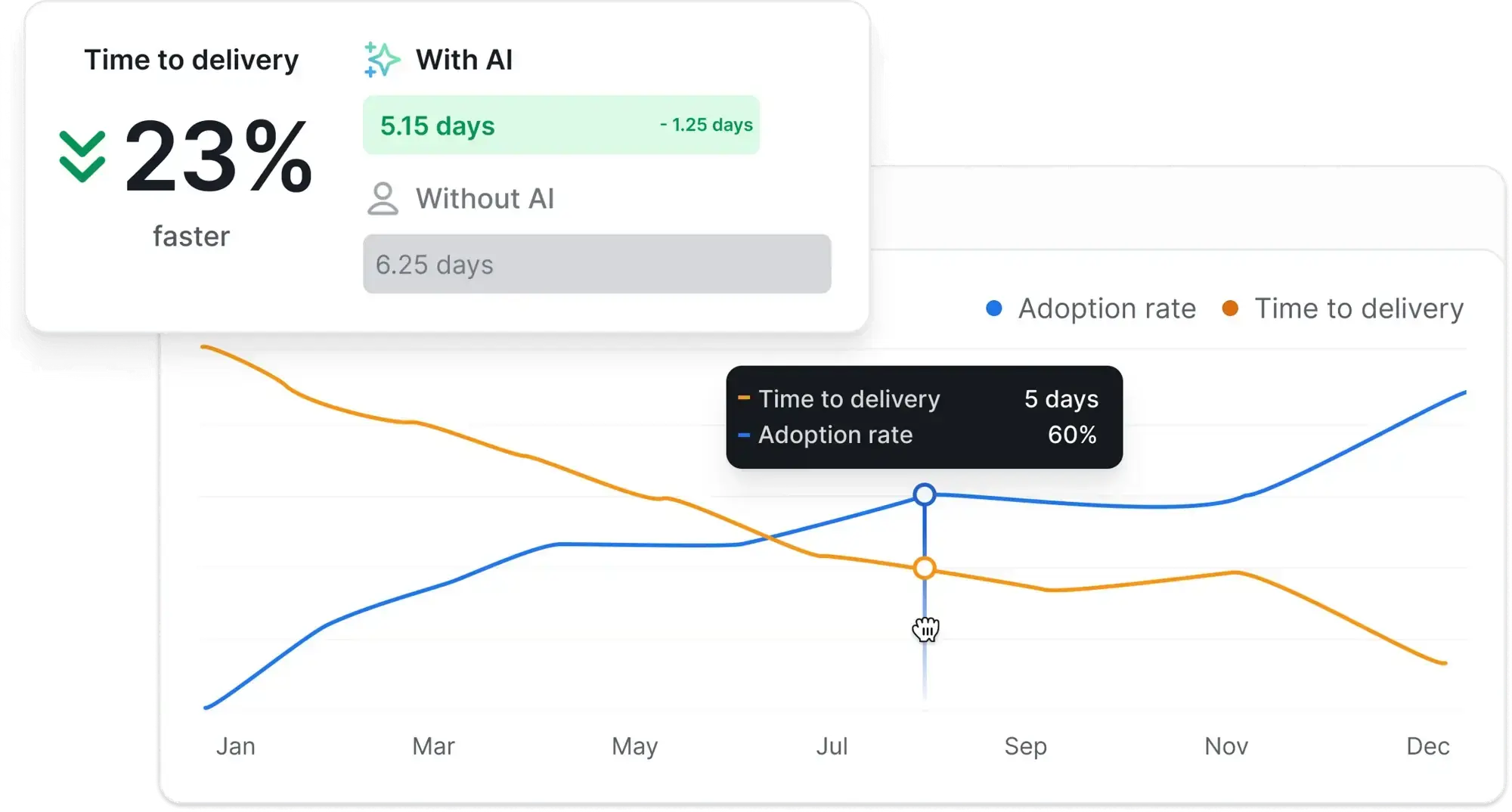
This allows teams to examine whether increased AI usage corresponds to meaningful changes in delivery performance. AI adoption becomes observable and reviewable within existing ceremonies, rather than assumed or discussed qualitatively.
Delivery data alone does not explain why performance changes. Axify Intelligence continuously analyzes delivery metrics to identify emerging bottlenecks, detect unexpected shifts, and provide context around what changed and where.
This feature includes the ability to chat with an AI assistant that is already grounded in your organization’s delivery data, metrics, and workflows. Unlike GPT or other AI agents, you can ask it context-aware questions and get answers tied directly to teams, repos, timeframes, and recent delivery changes.
You will be able to:
As such, you can focus your Agile ceremonies on deciding which adjustments to test based on surfaced insights.
DORA metrics provide a standardized view of delivery performance when tracked consistently over time. Axify supports real-time tracking and trend analysis for deployment frequency, lead time for changes, change failure rate, and recovery time.
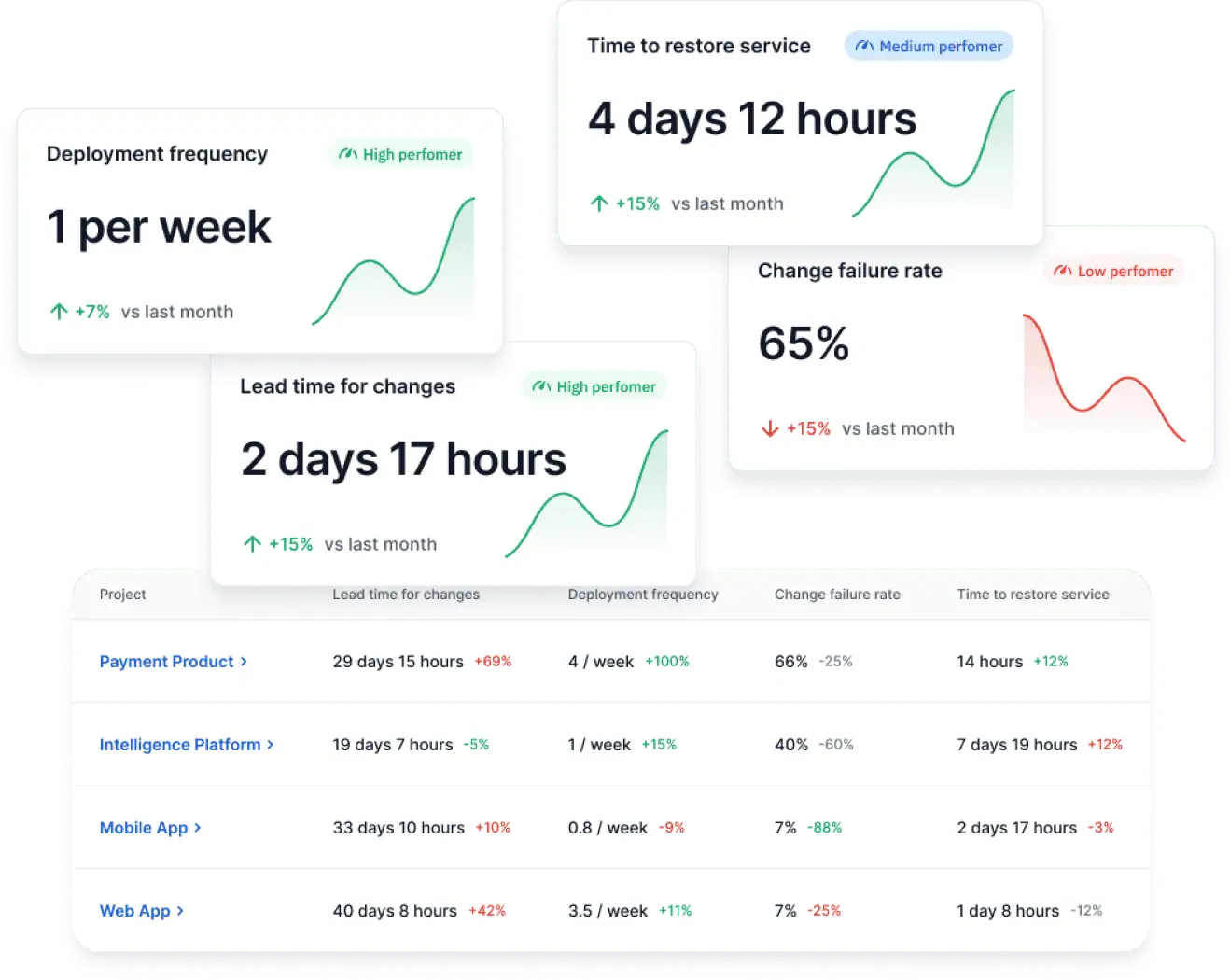
When used inside sprint reviews and retrospectives, these metrics help teams connect delivery outcomes to prior planning and execution decisions. This keeps reviews focused on delivery performance.
As delivery scales, delays often accumulate outside individual team control, particularly at handoffs between planning, development, review, and release. Axify’s value stream mapping visualizes where time concentrates across the delivery lifecycle.
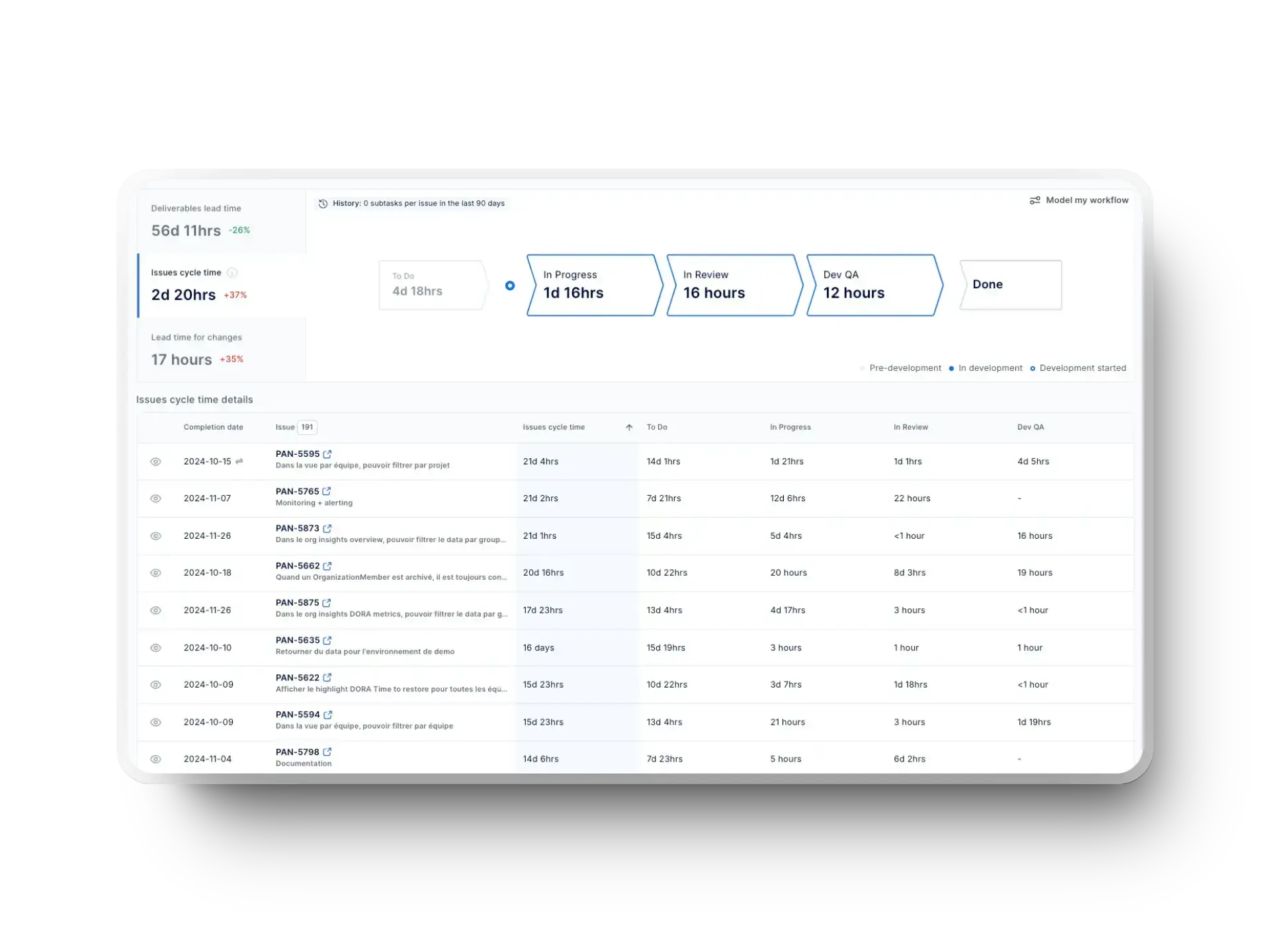
This visibility helps retrospectives focus on system-level constraints rather than isolated issues. Teams can identify persistent bottlenecks and evaluate whether changes tested in previous sprints reduced overall flow time.
Improvement efforts stall when teams attempt to address too many issues simultaneously. Axify’s developer productivity assessment provides a structured baseline across development practices, ways of working, product alignment, and collaboration.
This baseline helps teams prioritize improvement efforts discussed in ceremonies and track whether those changes produce measurable effects over time.
In addition to the assessment scores, Axify applies AI-driven analysis to detect patterns across delivery data and survey inputs. These insights highlight where performance signals diverge and which areas warrant attention first.
As you can see below, the system generates context-aware recommendations tied to observed delivery behavior.
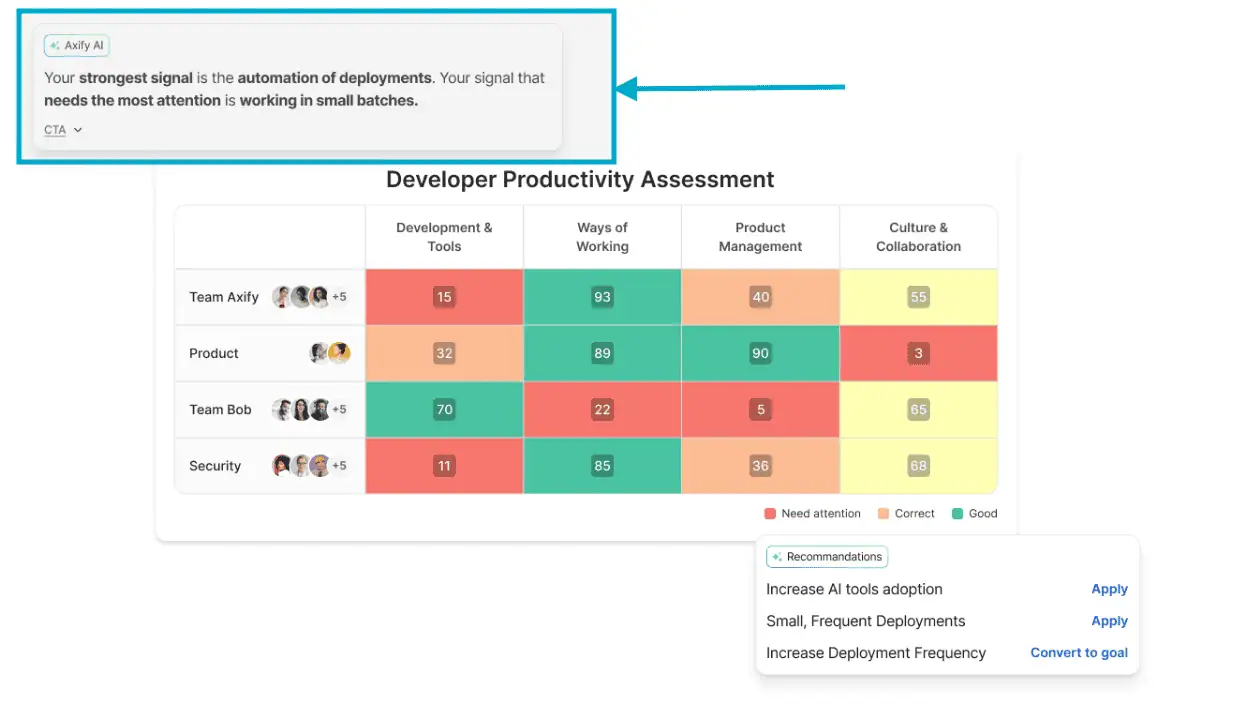
For example, when deployment automation is strong, but batch size remains large, recommendations may focus on reducing work size or increasing deployment frequency to improve flow.
***
When Agile ceremonies feel busy but delivery outcomes remain unchanged, the issue is rarely the meetings themselves. More often, teams lack a shared delivery context to support decision-making inside those meetings.
Axify provides that context so Agile ceremonies can influence outcomes again.
Book a demo today to see how Axify gives you that context before the next sprint starts.
