Delivery Performance
13 minutes reading time

Many performance incidents are detected in production, though they accumulate during design, development, and integration, then surface under load.
Teams that address performance late absorb avoidable cost: rework, infrastructure overspend, incident recovery, and delayed releases. Teams that treat performance as a continuous engineering concern reduce failure risk and improve release predictability.
For example, two teams at BDC used Axify to analyze delivery flow and adjust review ownership and sequencing. Delivery time improved by 51%, and time spent in quality control dropped by 81%.
In three months, this led to 10x ROI and $700k recurring productivity gains/year.
We want to help you achieve your business goals, too.
That’s why, in this article, we will outline:
Software Performance Engineering (SPE) is a systematic and quantitative approach to developing software systems. The goal is for these systems to meet defined performance objectives from the very beginning of the development lifecycle. As such, you must treat performance as a design constraint and not as a late validation step.
This early focus prevents cost accumulating over time.
When you find performance defects in production rather than during design or coding, they cost 10x to 100x more to fix. That cost reflects avoidable rework, regression risk, and roadmap disruption.
So what changes in your daily work?
To learn more, you can watch this MIT lecture for a clear explanation of software performance engineering:
AI coding assistants are accelerating software development, but they also increase the risk of performance issues entering production.
Tools such as GitHub Copilot, ChatGPT, and other AI-assisted coding environments can generate large amounts of working code quickly. However, that code is usually optimized for correctness and speed of implementation, not for performance efficiency.
This creates two important shifts for engineering leaders.
This is exactly why Software Performance Engineering becomes more important in AI-assisted development environments.
When performance targets, profiling practices, and automated regression checks are embedded into the SDLC, teams can move fast with AI tools without sacrificing system reliability or scalability.
So, let’s discuss the gains of SPE in more depth.
Many teams delay performance engineering because they assume it adds overhead.
Modeling, validation, and performance reviews can look like extra work during already constrained delivery cycles. The hesitation is understandable.
However, late performance discovery affects release timing, infrastructure cost, and rework scope. SPE changes when those constraints are surfaced and how large they are when addressed.
These are the outcomes you should expect:
Now, let's go over the difference between SPE, performance testing, and APM.
Software performance engineering (SPE) defines performance constraints and validates them throughout the SDLC. Performance testing evaluates how a mostly completed system behaves under load.
The difference is scope and timing.
Performance testing is typically executed after feature development, most times within QA. Its purpose is to measure system behavior under simulated load and identify bottlenecks before release.
Common activities include:
These tests act as a validation gate. They simulate production conditions and expose issues that affect latency, throughput, or reliability.
However, performance testing does not influence earlier architectural decisions.
If tests reveal database contention, blocking service calls, or inefficient data access patterns, remediation may require refactoring across services, schema redesign, or release delays.
Software performance engineering, in contrast, integrates performance criteria into:
SPE aims to prevent structural bottlenecks before they propagate across teams and services.
In short:
Watch this video for a clear SPE vs. performance testing breakdown:
Yes. Software Performance Engineering does not replace performance testing. It makes those tests far more effective.
When performance objectives are defined early and validated continuously, load tests are no longer the first time teams discover system limits. Instead, performance testing becomes a final confirmation that architectural decisions hold under production-like conditions.
That’s why strong engineering organizations use both:
Software performance engineering (SPE) defines performance constraints before and during development. Application performance monitoring (APM) analyzes system behavior in production.
The distinction is timing and control.
APM provides real-time visibility into:
Its purpose is operational diagnosis. When latency increases or error rates spike, APM helps identify the affected service, query, or downstream dependency. It supports incident response, root cause analysis, and recovery measurement under real traffic conditions.
However, APM operates after architectural and implementation decisions are in place. It detects performance failures; it does not prevent the design choices that caused them.
SPE, in contrast, shapes those decisions earlier. It defines capacity targets, concurrency limits, and resource budgets during design and validates them during implementation. The goal is to reduce the likelihood and severity of runtime performance incidents.
In short:
Both are necessary. APM stabilizes live systems. SPE reduces the frequency and scope of performance-related incidents across the lifecycle.
Watch this short video if you want to learn more about APM:
Next, let's take a look at the core components and processes of SPE.
Software performance engineering combines modeling, validation, monitoring, and feedback loops across the SDLC.
These components work together to define performance expectations, test architectural assumptions, and prevent regressions as the system evolves.
Software performance engineering begins with explicit objectives and constraints.
Objectives define what acceptable performance looks like. These typically include:
Constraints define the operating boundaries of the system. These may include:
These objectives and constraints must be measurable and documented before implementation scales. Vague goals such as “fast” or “scalable” do not inform architectural decisions.
Clear performance targets allow teams to:
Without defined objectives and constraints, performance decisions are deferred until testing or production exposes constraints. With them, performance becomes an engineering variable that can be tested, monitored, and adjusted throughout the SDLC.
Architecture determines how a system behaves under load. Once services, data stores, and communication patterns are established, performance characteristics become harder to change.
Performance-aware design starts with expected load profiles:
These inputs shape structural decisions such as:
Scalability must be explicit. Horizontal scaling assumptions, replication models, and partitioning strategies should be validated against defined throughput and latency targets.
Capacity planning translates performance objectives into infrastructure requirements.
This includes estimating CPU, memory, storage I/O, and network bandwidth under expected load. It also involves modeling how usage growth affects those requirements over time.
Architectural trade-offs are evaluated against measurable constraints:
Without performance-informed architecture, systems rely on optimistic assumptions. With it, scalability and resource consumption become deliberate design variables rather than post-release corrections.
Software performance engineering relies on defined metrics and explicit models. Without both, performance discussions remain qualitative.
SPE focuses on measurable indicators that reflect system behavior under load:
These metrics must be tied to defined load conditions. Latency without context (e.g., under 10 RPS vs. 1,000 RPS) does not inform design decisions.
SPE uses two categories of measurement:
Predictive metrics are used before full-scale deployment. They estimate how a system will behave under expected load. Examples include:
These metrics guide architectural decisions and infrastructure planning.
Observational metrics are collected from running systems. They reflect actual behavior under real workloads. Examples include:
Observational data validates predictive assumptions. When deviations appear, models are adjusted and constraints re-evaluated.
Remember: Effective SPE combines both: predictive models inform design, while observational metrics confirm whether those assumptions hold as usage scales.
Feedback loops ensure performance regressions are detected and corrected as the system evolves.
During development, performance checks run regularly, so regressions are visible before they spread across the codebase. This can include:
In production, performance signals inform planning. For example:
The loop closes when measurement changes behavior.
Post-incident reviews should not stop at identifying failure. They should update performance targets, assumptions, and validation steps so the same failure pattern is less likely to recur.
Software performance engineering follows a structured, repeatable process.
It begins by defining measurable performance requirements, continues with validation during development, and extends into production monitoring that informs future design decisions. Each phase reinforces the next.
The goal is systematic control over how performance expectations are defined, tested, and revised as the system evolves.
Start by translating business needs into technical performance criteria. For example:
Requirements should specify measurable limits: response times, throughput targets, concurrency levels, and acceptable error budgets.
Thresholds also clarify tradeoffs.
For instance, a strict latency requirement may increase infrastructure cost. A relaxed target may reduce cost but increase abandonment risk. These decisions belong in planning; they're not for post-incident reviews.
Also, early validation reduces waste. When teams rely on quality-assurance metrics during design and coding, they expose performance risks before integration amplifies them.
In fact, research shows that using early quality-assurance metrics can reduce testing effort by up to 34% and improve testing efficiency by about 50%. That gain comes from preventing rework.
So, small adjustments during design are cheaper than architectural changes after release.
Requirements mean little without ongoing validation.
So, you should run performance checks during development. That includes:
Regression prevention is the main objective here.
A single inefficient change can add milliseconds to a hot path. If repeated across multiple merges, that drift compounds. Regular validation stops incremental degradation before it becomes visible to users.
This stage changes how you work day to day.
Over time, performance stops being a separate activity handled by a specialist and becomes a standard part of how your team writes and reviews code.
Production traffic will expose behavior that staging environments cannot replicate. Monitoring ensures those signals inform the next engineering decision.
Besides, continuous monitoring in DevOps pipelines reduces downtime by 30% and incident resolution time by 40%, as production metrics feed back into development for proactive adjustments.
We advise you to track performance under real conditions:
When deviations appear, respond structurally.
Software performance engineering isn’t owned by just one specialist. You need clear responsibilities across teams.
Here are the primary roles and what they actually own in practice:
Performance engineers define measurable performance targets, design validation strategies, and analyze bottlenecks at the system level.
They build load models, review architectural assumptions, and translate production incidents into design corrections. Their role connects requirements, testing, and monitoring so that performance decisions are based on data.
Developers make implementation decisions that directly affect performance.
They write code within defined latency budgets, resource limits, and concurrency constraints. During design and code reviews, they assess how new features affect query volume, network calls, and memory usage. They remediate regressions detected through automated performance checks.
Infrastructure decisions determine how applications behave under load.
Platform teams manage capacity planning, scaling policies, and environment consistency. They configure observability pipelines, enforce resource quotas, and validate that infrastructure behavior aligns with architectural assumptions.
Clear ownership prevents performance gaps between development and operations.
Here are the primary tool groups used in SPE and what they actually help you control.
Performance testing tools simulate load before release. That includes:
These tools answer a focused question: how does the system behave under controlled pressure?
They measure latency, throughput, and error rates under predefined scenarios. However, they operate on a built system.
If architectural assumptions were flawed, testing exposes the issue but does not explain why it happened upstream. Testing remains essential, but it is a verification step, not a design strategy.
APM tools observe live systems in production. They provide runtime tracing, infrastructure metrics, transaction monitoring, and log analysis. When an incident occurs, APM helps you diagnose root causes by correlating service calls, database latency, and infrastructure saturation.
This layer focuses on runtime behavior. It tells you what is happening in production and where the failure manifests. It does not analyze how planning decisions, review delays, or batching practices contributed to that outcome.
Monitoring closes the operational feedback loop, but it does not evaluate workflow efficiency.
Engineering intelligence platforms operate at the delivery system level: they analyze how work moves through your development lifecycle.
Axify operates at this level. It gives you visibility and helps you make the right decisions to power your SPE.
The platform aggregates SDLC data across Jira, Azure DevOps, GitHub and GitLab. It also imports data from AI coding agents like GitHub Copilot, Claude Code, and Cursor. Workflow phases such as coding time, pickup time, review time, and deployment time are analyzed to expose delays and handoff friction.
Delivery behavior is then correlated with outcomes like change failure rate and failed deployment recovery time, so you can see how workflow decisions influence production stability.
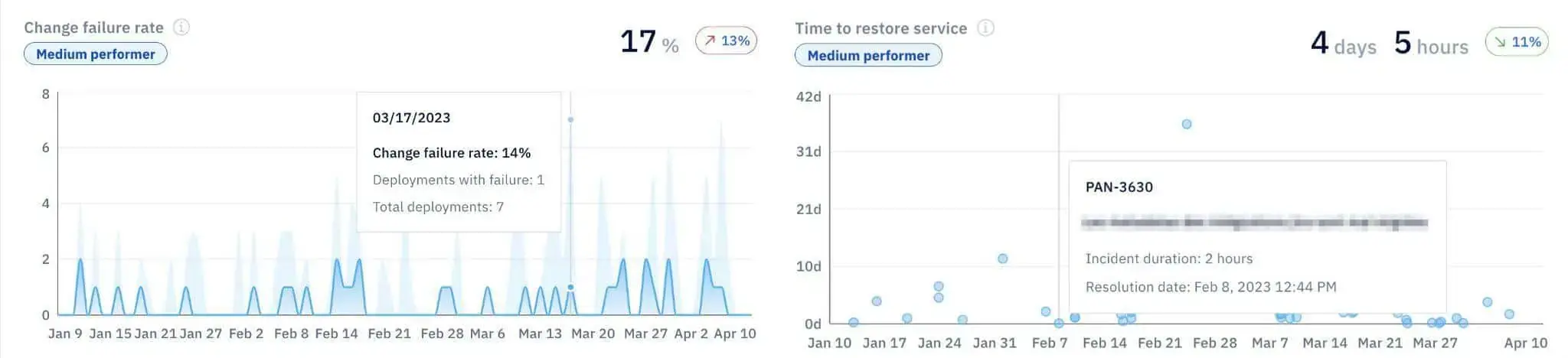
Axify’s Value Stream Mapping tool shows you how work flows from one stage of the SDLC to another, exposing team trends and possible issues.
As such, you feed your SPE analysis with real data.
You can understand whether review bottlenecks, large batch sizes, or delayed merges increase risk before deployment. That is delivery system analysis.
With Axify Intelligence, you gain a decision partner, too.
It detects bottlenecks, explains what changed in your workflow, and recommends actions tied to delivery constraints.
The embedded AI assistant understands your historical delivery data, surfaces structured executive summaries, and lets you ask targeted questions about trends or regressions. It can also support decision-making by suggesting policy adjustments such as limiting work in progress or redistributing review ownership.
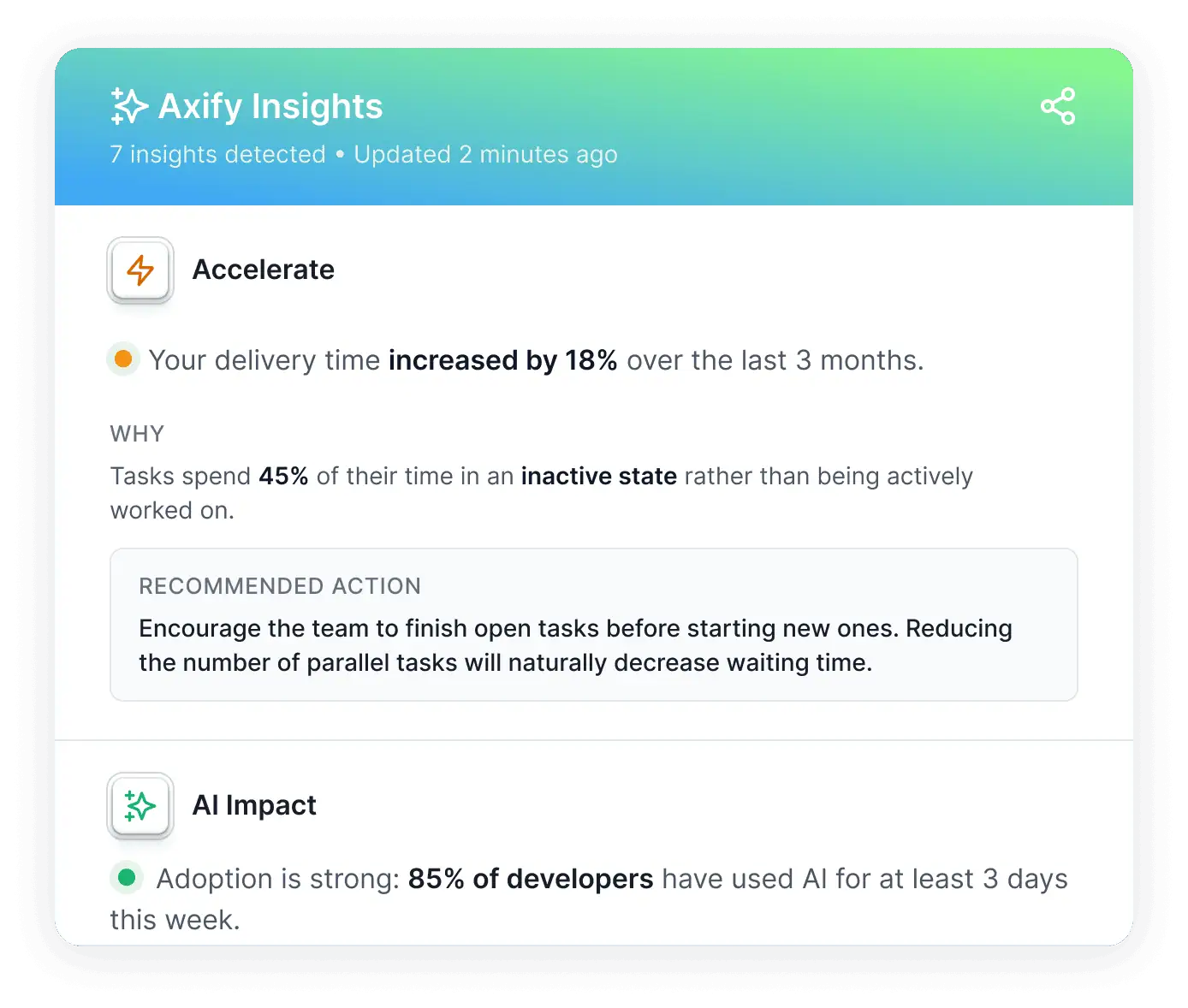
As you can see, Axify goes beyond mere testing or runtime monitoring.
Instead, it helps you see how engineering behavior shapes your performance outcomes and helps you make the right decisions based on those findings.
Even with a defined process, structural pressures inside delivery may undermine your performance discipline.
Here are the most common challenges you can face in practice:
Performance failures rarely come only from “slow code.” They typically come from how work moves through planning, implementation, review, and deployment.
So even when a load test or an APM trace points to a bottleneck, the upstream causes can still be hiding in batch size, review queues, or inconsistent team practices that keep shipping risk forward.
Axify gives you delivery-level visibility that helps connect those upstream behaviors to downstream performance risk.
This shows up in a few concrete ways:
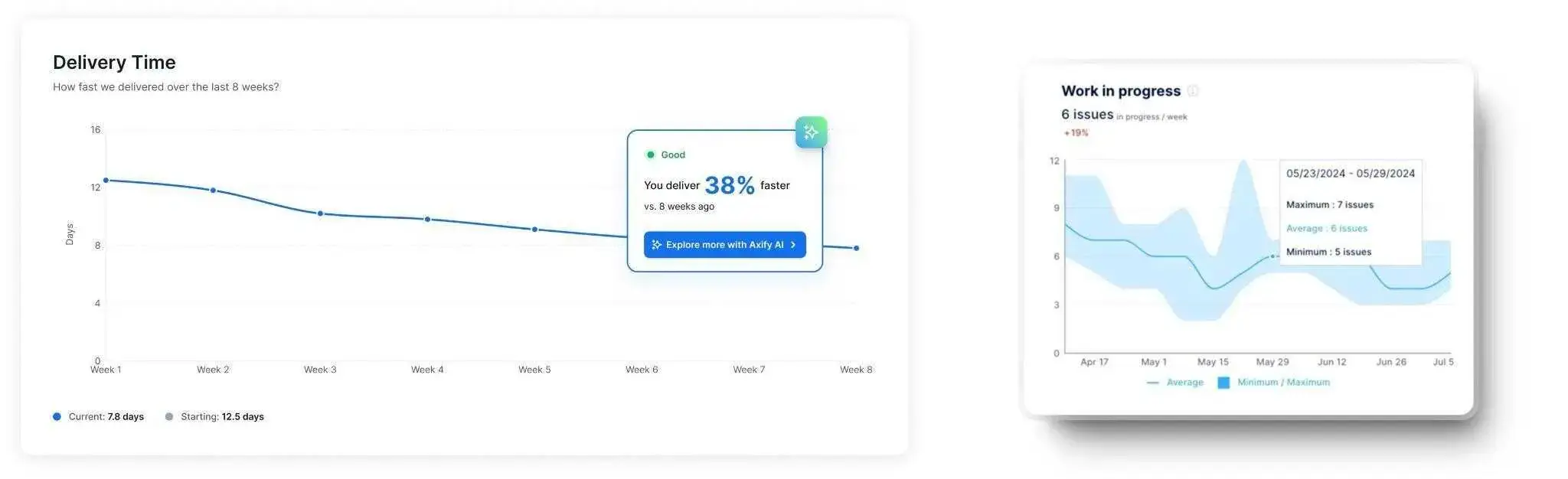
This is why Axify complements performance testing and APM.
Testing validates behavior under load, and APM diagnoses runtime behavior in production. Axify focuses on the process and people side: how delivery decisions and workflow constraints shape what reaches production and how risky that change is.
Book a demo with Axify today to see how our AI decision layer supports performance planning, validation, and remediation using your delivery data.

No. Performance optimization usually refers to improving an existing system after performance problems appear. Software performance engineering focuses on preventing those problems during design and development by defining performance objectives and validating them throughout the SDLC.
Scalability engineering focuses specifically on how systems handle increasing traffic or data volume. Software performance engineering is broader: it defines overall performance behavior, including latency, throughput, and resource efficiency, while also addressing scalability as one component of system design.
A common SPE practice is defining a latency target during system design, such as keeping p95 response time below 200 milliseconds under peak traffic. Engineers then validate architectural choices, database queries, and service communication patterns throughout development to ensure that the system can meet that target before release.
Software performance engineering should start during system design and architecture planning. Performance constraints such as latency budgets, throughput targets, and concurrency limits influence architectural decisions like service decomposition, caching strategies, and database selection. Starting SPE after implementation limits the ability to correct structural issues without major refactoring.
Software performance engineering combines multiple skills, including system architecture design, load modeling, performance testing, observability analysis, and capacity planning. Engineers also need to understand how application code, infrastructure behavior, and delivery workflows interact to influence latency, throughput, and system reliability.