Delivery Performance
9 minutes reading time

A predictable sprint starts long before planning day. It depends on how clearly your team understands and prepares its backlog.
But when refinement slips, work piles up, priorities blur, and delivery confidence drops. And you’ve probably seen other issues happening at the same time. For example, stories might roll over, blockers build up, and focus fades.
We'll help you avoid that.
In this article, you’ll see how backlog refinement keeps your sprint on track, improves flow, and helps you deliver with confidence. But first, let’s define what this process really means and why it matters for you.
Backlog refinement is the process where you review, clarify, and update your product backlog so it stays accurate and ready for upcoming sprints.
It’s how you turn vague ideas into actionable work. When refinement is consistent, sprint planning becomes faster, estimates are more reliable, and priorities stay clear.
If you’re a more visual learner, here’s a YouTube video showing some examples of backlog refinement:
But here’s what’s interesting.
According to Parabol, 51.8% of Agile teams refine their backlog in real-time meetings, while others rely on async discussions. That variety shows you how adaptable this practice can be.

The term "backlog grooming" was once common in Agile teams, but modern Scrum now uses "backlog refinement." The shift is about improving language and professionalism within the Scrum team.
Both terms describe the same activity, though. That includes reviewing and updating backlog items for clarity, size, and priority.
Whether you’re using the updated term or not, the end goal should be practicing Agile with clarity and staying aligned with current Scrum standards.
With that foundation in place, it’s time to look at when refinement should happen.
The best time for product backlog refinement is mid-sprint when the Scrum team still has context from current work but enough distance to plan what’s next.
Also, you should treat it as a continuous process rather than a single meeting. That mindset helps you stay ahead of dependencies, blockers, and unclear backlog items before they affect Sprint planning.
Now, here’s a useful guideline.
The Scrum forum suggests spending about 10% of the sprint capacity on refinement. Another recommendation is to dedicate roughly three hours per two-week sprint, but spread the meetings. This equals less than 5% of total working time.
These numbers remind you that refinement should be regular but lightweight, so that it doesn’t disrupt delivery.
In practice, this balance supports both short-term visibility and long-term planning. Regular refinement keeps stories actionable while helping the product owner maintain a realistic roadmap that evolves as your priorities shift.
Now that you know when to hold a refinement, let’s look at what actually happens during one.
A refinement meeting helps your Scrum team prepare work for upcoming sprints by turning rough ideas into clear, actionable tasks. It’s a working session where alignment, clarity, and estimation come together to improve delivery flow. So, let's see what you'll need to work on.
During refinement, the team reviews backlog items to make sure they are clear, valuable, and ready for development. The main activities include:
These actions keep your Agile process running smoothly and prevent last-minute chaos during Sprint planning.
A productive refinement session brings together your product owner, Scrum master, and development team. Each plays a different role but shares one goal, and that's to improve the quality of the backlog.
The product owner drives clarity and business value, the Scrum master facilitates flow, and the development team contributes technical insight and estimates.
The product owner is accountable for backlog quality, but team collaboration is key. Each participant helps validate effort estimates, detect risks, and expose dependencies early. This shared responsibility turns refinement into a continuous learning loop.
Also, feel free to watch this YouTube video for a real example of how a Scrum team runs a backlog refinement meeting:
Since we’ve covered what takes place during refinement, it’s time to look at how to do it step by step.
A clear backlog refinement process helps you turn unstructured ideas into ready-to-deliver work. Each step adds precision, clarity, and shared understanding across your team.
So, let’s go through the key steps that make refinement effective.
You can start by reviewing each item to confirm that everyone understands its purpose, scope, and business value. Clarity at this stage prevents misalignment later in development.
Also, you need to make sure that descriptions and supporting details are complete. Without this shared understanding, team members risk building the wrong thing or missing dependencies across your systems.
Next, we advise you to break down oversized backlog items into smaller, testable stories or merge duplicates. This improves visibility and flow across your team’s workflow board.
After all, small, well-defined tasks are easier to estimate, assign, and track. They also reduce context-switching, which helps you maintain momentum throughout the sprint.
Make sure to refine or add acceptance criteria. These criteria guide both development and testing. They define what “done” means and reduce ambiguity for the product manager and the development team.
Once backlog items are clearer, it’s time to revisit their size. You can use methods such as planning poker or other estimation frameworks that suit your workflow.
This approach is effective, which is why so many teams do it.
A survey of 121 Agile practitioners across 25 countries found that 73% re-estimate tasks whenever documented information changes. Also, many ranked acceptance criteria as one of the most helpful reference points. That shows how important clarity is for effort estimation.
Finally, rank tasks based on value, urgency, and technical readiness. You should consider dependencies, risk, and strategic alignment with the product management vision.
Prioritization doesn't mean you should be pushing the loudest requests forward. However, you should be sequencing work to balance delivery speed and stability.
Remember: Each of these steps builds a foundation for predictable, efficient delivery. When you follow them consistently, you reduce rework, improve sprint focus, and strengthen accountability across your Agile team.
With the process clear, it’s time to explore the methods teams use to refine their backlog.
Different teams approach refinement in various ways. Regardless of the method you choose, your goal should be to create clarity, reduce rework, and make planning smoother.
Below, we discuss the most practical approaches that can increase the effectiveness of backlog refinement. And yes, we’ve tried and tested them all in our own team.
User story mapping helps you organize backlog items visually to see workflows, dependencies, and the big picture. It connects each story to a broader customer journey. This makes your team prioritize work that drives the most value.
If you apply it correctly, results will show.
Lyft used digital story maps to align multiple teams working on various touchpoints. The result was a 20% improvement in their internal and external velocity metrics.
Similarly, TIM Solutions GmbH improved visibility across five product and development teams by mapping stories collaboratively. This helped them see beyond sprint scopes and make better product decisions.
The INVEST criteria mean: Independent, Negotiable, Valuable, Estimable, Small, and Testable. This serves as a checklist for story quality, to make sure that each backlog item is actionable and ready for development.
A practical rule of thumb is to use INVEST as part of every refinement conversation.
When a story fails one of these criteria, it’s a sign that the team needs more clarity or discussion before moving it forward. This keeps your backlog healthy and prevents half-defined work from entering development.
In this practice, the product owner, developer, and tester meet to align on requirements and acceptance criteria before a sprint starts. It’s a proactive step that builds shared understanding early.
Studies show that incorporating Three Amigos discussions alongside Scrum can reduce defects by about 40% through early clarification or requirements.
One business analyst also noted that this technique increases efficiency by catching potential issues before development begins. Together, these conversations save time and reduce churn.
Refinement typically involves sizing work based on effort and uncertainty. Techniques such as story points, T-shirt sizing, or planning poker can help your team estimate consistently and spot risky or unclear work.
Research supports this approach.
A study published in the Journal of Systems and Software shows that estimation techniques—particularly Planning Poker—can boost accuracy by up to 40% in certain contexts. The reason is simple: they transform subjective opinions into a form of collaborative calibration, where multiple perspectives converge into a more reliable estimate.
However, these methods are not a silver bullet. Group estimates remain vulnerable to anchoring, dominant voices, and optimism bias. They also demand time and tend to be less accurate when teams estimate work they don’t fully understand.
In practice, these techniques are most effective when supplemented with real delivery data. Historical cycle times, flow metrics, and actual throughput provide a grounded baseline that akes estimates more robust—and often less necessary.
Breaking down large backlog items helps you reduce hidden dependencies and technical debt. Smaller stories move faster through the system, and you can track progress more precisely. This step also prevents teams from overcommitting and helps them stay adaptable when priorities shift mid-sprint.
The Definition of Ready acts as a quality gate before work enters a sprint. It ensures each backlog item has a clear scope, valid acceptance criteria, and realistic effort estimates.
Having both Definition of Ready and Definition of Done reduces rework and defects significantly, because teams catch ambiguities before work begins. This small discipline saves hours of rework later in the sprint.
When applied together, these techniques turn backlog refinement from a routine meeting into a structured, data-driven process. They help you focus on what matters most, and that is delivering value consistently while minimizing wasted effort.
To make these techniques work consistently, your team needs clarity on who owns each part of the refinement process. Everyone should also understand how responsibility is shared across the team.
Now, since the techniques are clear, let’s move on to the people behind them.
Backlog refinement works best when ownership and collaboration are clear. The product owner leads the process by maintaining the backlog. That includes ensuring every item aligns with business goals and is detailed enough for discussion. Their role is to keep priorities up to date and context visible.
The Scrum team contributes by reviewing and clarifying backlog items. Developers challenge assumptions, estimate complexity, and flag technical dependencies or risks. This shared understanding keeps refinement grounded in practical delivery realities rather than assumptions.
Meanwhile, the Scrum master facilitates the session. They guide discussions, maintain focus, and help prevent the meeting from turning into another open-ended planning call. Their oversight ensures that refinement time is productive and data-informed.
When each role performs effectively, refinement becomes a continuous, value-driven activity that supports predictable sprint planning. It also builds stronger alignment across all team members. This helps everyone move in the same direction.
Next, let’s explore the key benefits that come from effective backlog refinement.
Strong backlog refinement turns sprint planning into a focused, data-driven process. When your backlog is clear and updated, teams make faster, more confident decisions and avoid last-minute surprises that slow delivery.
Here's what you'll experience:
When refinement works this well, sprints feel smoother, meetings stay focused, and teams deliver outcomes. Up next, let’s look at the challenges that can make backlog refinement less effective.
Even experienced teams can struggle to keep backlog refinement productive. The goal is to balance clarity with efficiency, but that balance can slip when discussions lose focus or priorities aren’t clear.
Here are the challenges of backlog refinement:
Moving on, let’s look at proven best practices that make refinement both faster and more effective.
Strong backlog refinement is about creating structure and consistency in how your team plans, estimates, and delivers. When that structure is in place, everyone stays aligned, and discussions stay focused. So, these best practices help you make every refinement session sharper and more productive.
Keep refinement meetings focused and predictable. Long sessions typically lead to fatigue and shallow discussions, while short, timeboxed ones push the team to stay intentional.
According to Talent500, successful teams limit refinement sessions to 60-90 minutes and usually schedule one or two refinement sessions per sprint. That’s enough time to clarify priorities without derailing your daily work.
A prioritized product backlog helps you work on what matters most right now while maintaining a clear view of what’s next. So, we advise you to avoid refining everything at once.
Instead, focus on stories that are likely to enter the next one or two sprints. This keeps discussions relevant and prevents wasted effort on low-priority work.
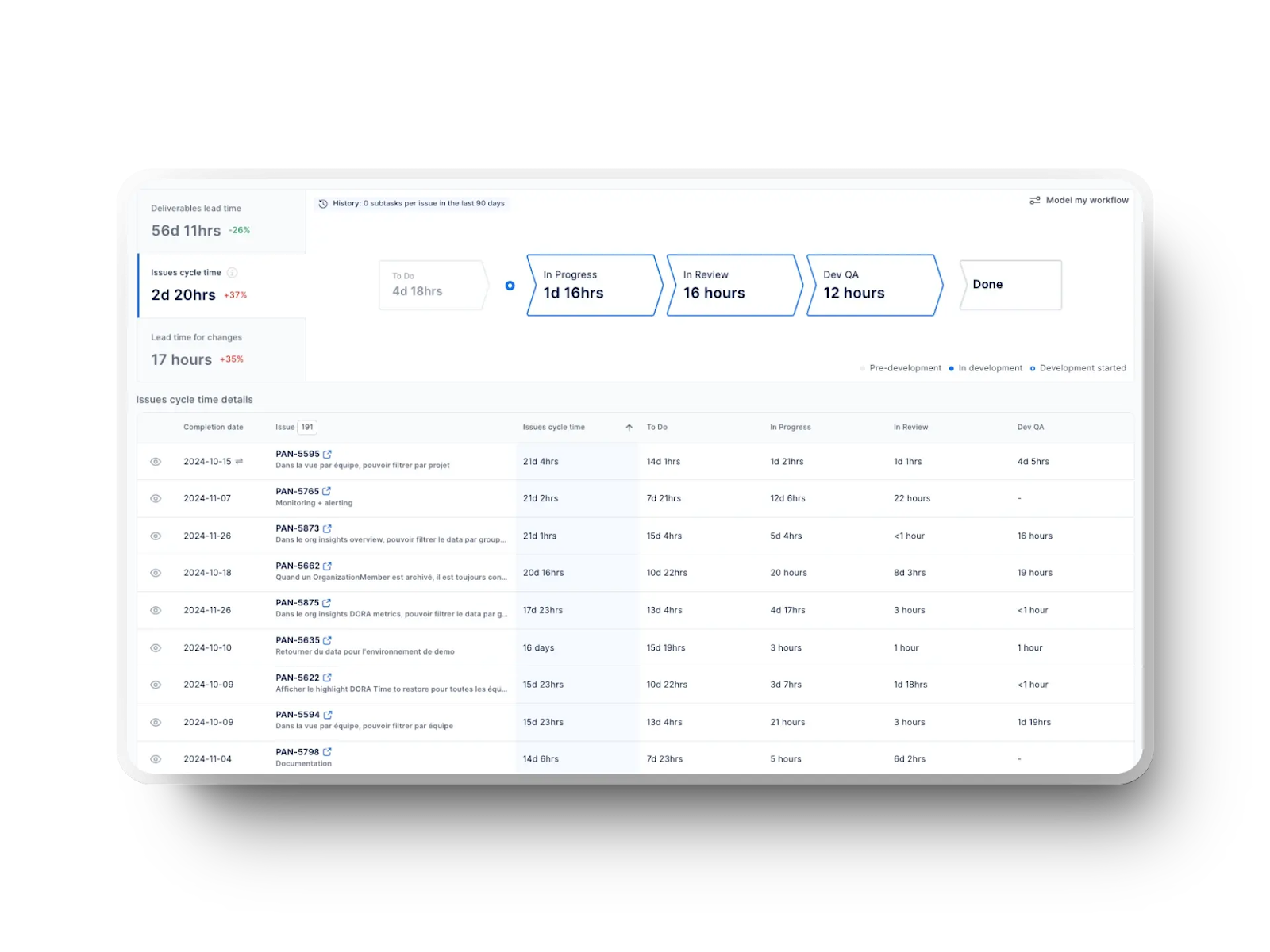
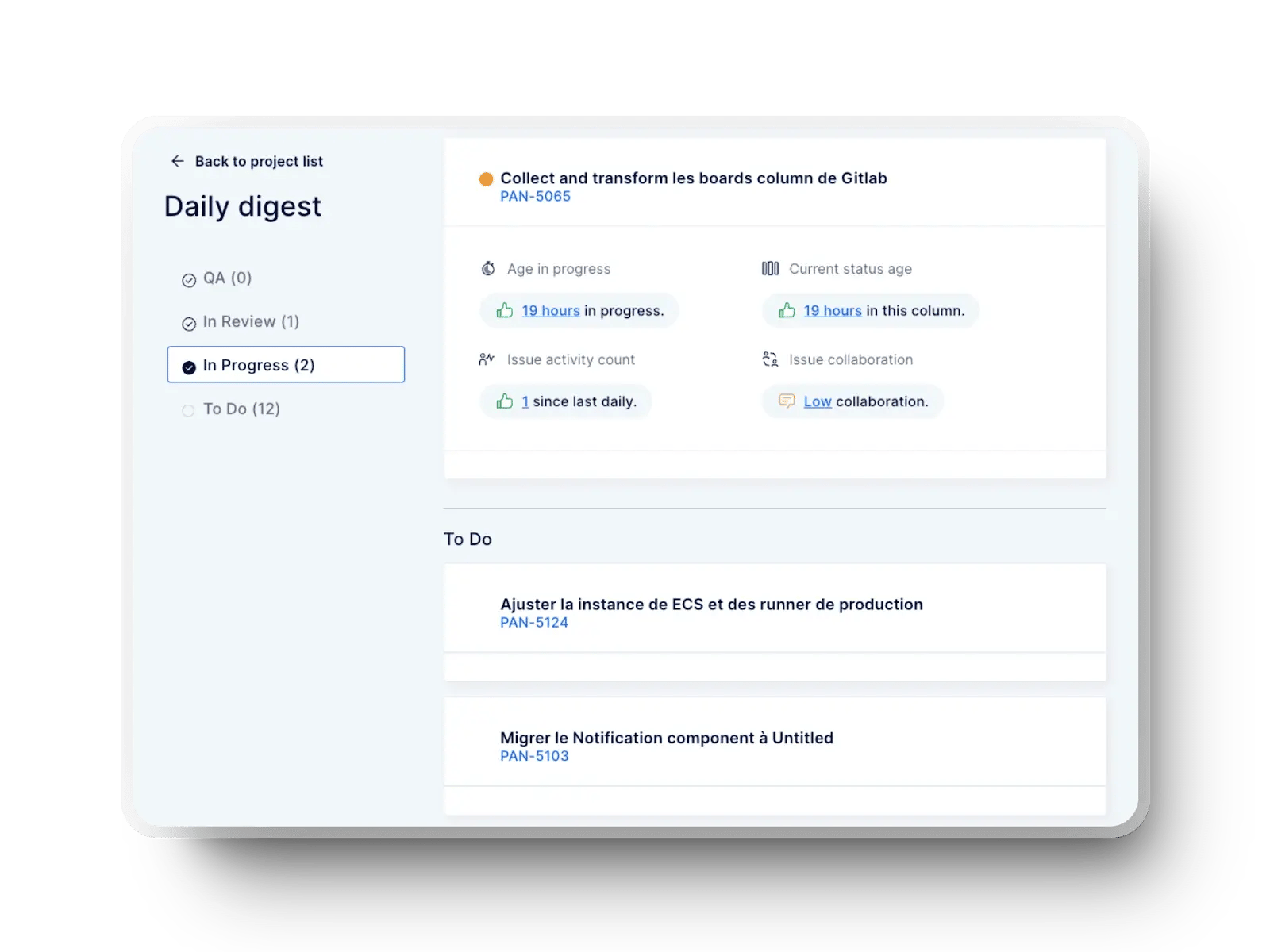
Data-driven refinement gives you perspective beyond opinions. You can track metrics such as cycle time, work-in-progress, and stalled items to uncover bottlenecks and see how your process evolves over time. When you use these insights consistently, discussions move from subjective opinions to objective improvements.
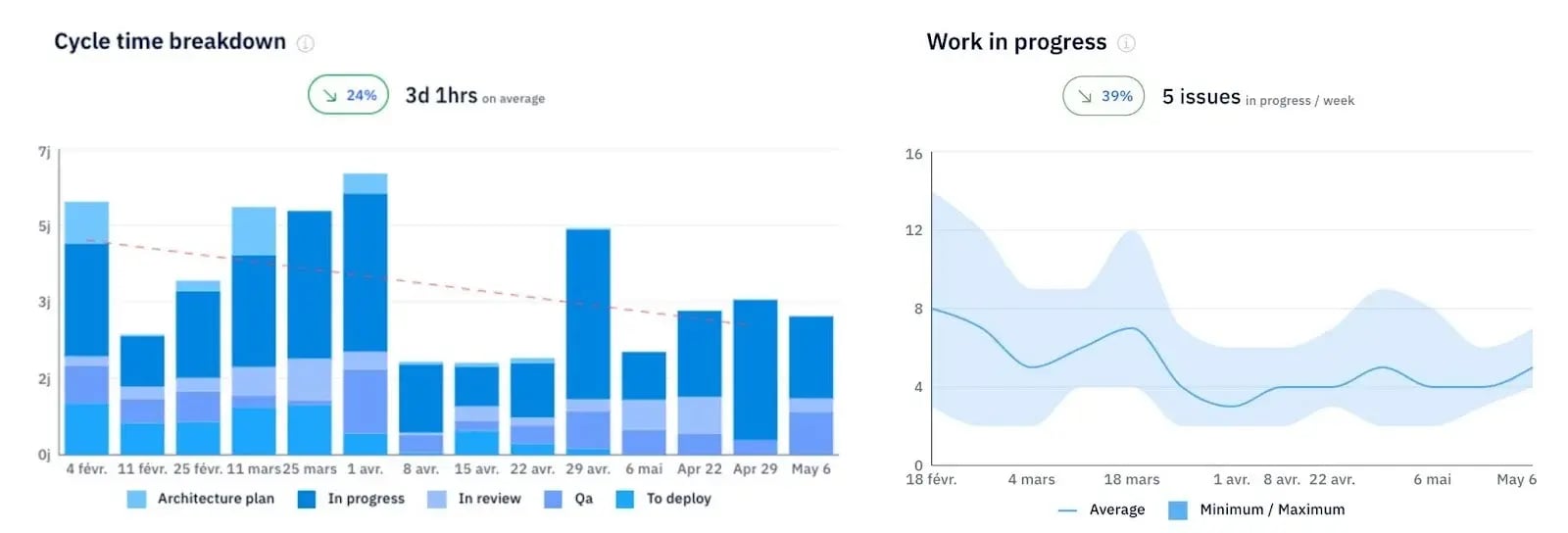
Backlog refinement works best when it’s consistent, focused, and data-informed. With Axify, you can turn what usually feels like a repetitive meeting into a continuous feedback loop that drives measurable delivery improvement.
Our platform gives you real-time insights into flow, aging items, and team performance. These insights help you refine smarter and plan with confidence.
If you want to see how it fits your process, book a free demo with us. We’ll show you how Axify helps teams like yours refine faster and deliver with clarity.

No, backlog refinement isn’t an official Scrum ceremony, but it’s an important ongoing activity in Scrum. It keeps your product backlog relevant and actionable so your sprint planning runs smoothly and your team always knows what’s coming next.
The Scrum master facilitates the session to keep discussions focused and timeboxed. They help the team clarify work, remove blockers, and ensure the meeting stays efficient without turning into a design review.
Most teams refine once per sprint, typically mid-sprint. The key is consistency. Spending about 5-10% of your sprint capacity on refinement helps you stay prepared without overloading your schedule.
The main outcomes you should aim for are:
In short, effective refinement gives your team clarity, alignment, and predictability going into every sprint.