AI
12 minutes reading time

AI adoption can show up in your day-to-day engineering work long before user-facing or business results do. Tooling decisions surface first in cycle time, review load, and delivery confidence.
Early tool rollouts can increase throughput while PR queues grow, security reviews slow, and rollback risk becomes harder to judge. That gap between activity and outcomes is where trust erodes, and budgets get questioned.
This article focuses on AI adoption as it actually happens in delivery teams. It explains how to recognize and measure real adoption, not just intent or strategy.
AI adoption describes the degree to which AI is integrated into day-to-day delivery workflows and decision-making. According to the State of AI-assisted Software Development 2025, AI adoption is measured as a composite of three indicators: it requires reflexive use, reliance, and trust.
At an organizational level, adoption deepens as generative AI tools move from ad hoc use into repeatable workflow steps. Once AI becomes part of repeatable delivery, clear ownership, policy coverage, and rollback paths have to be defined explicitly.
The experimentation stage looks different. Individual engineers try tools, usage spikes for a week or two, but results are likely to stay uneven. At scale, well-executed adoption changes how work moves through the delivery pipeline:
This transition from ad hoc use to predictable workflow integration is the AI adoption process leaders actually manage. It affects review expectations, failure modes, and how confidently teams ship changes.
Here, you can see how AI impacts an engineer's work:
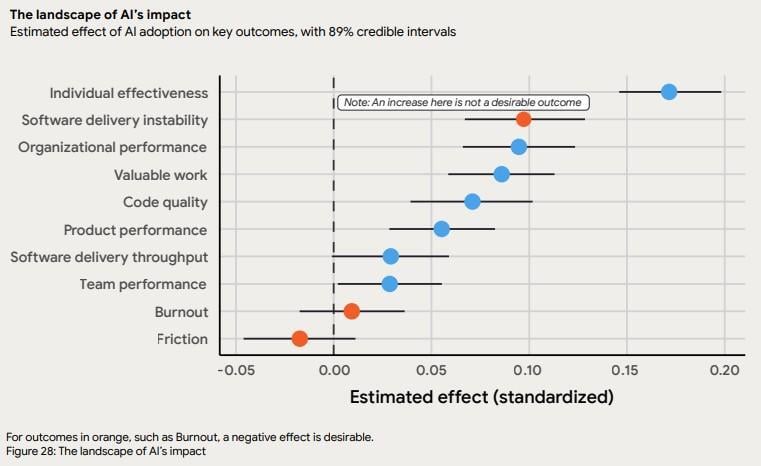 Source: State of AI-assisted Software Development 2025
Next, let's see what adoption improves.
AI is an amplifier, according to the DORA 2025 report.
In other words, AI adoption supports how work already flows through different stages. Strong review habits, clear ownership, and stable pipelines tend to improve. Weak processes tend to fail faster.
Here are the tangible benefits leaders see when AI is properly embedded into daily engineering work on top of strong, well-established workflows:
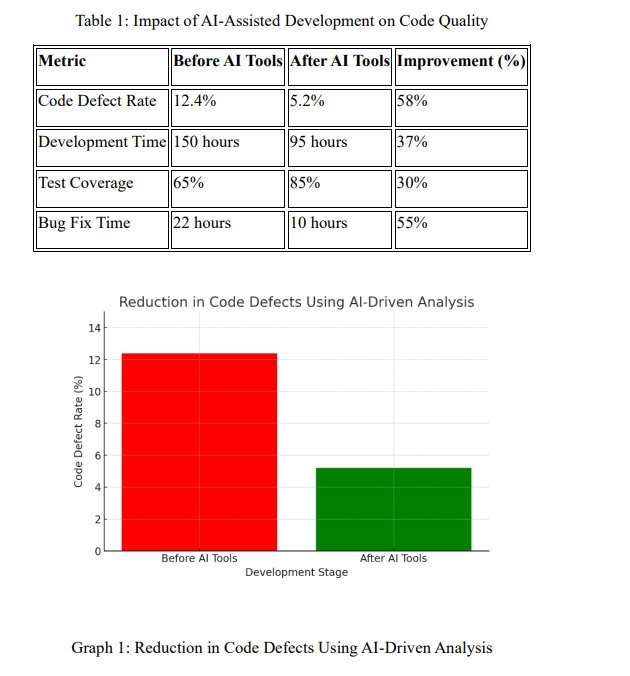
Moving on, let's see how adoption evolves across organizations.
From our experience, AI adoption rarely moves in a straight line across teams. Adoption usually spreads unevenly, shaped by delivery pressure, ownership gaps, and tooling choices.
That brings us to the first stage.
Early activity starts with individual engineers testing tools on their own.
According to Stack Overflow’s 2025 Developer Survey, 84% of developers report using or planning to use AI tools in their development workflow, and 51% use these tools daily. Sometimes, this decision to adopt AI isn’t made at an organizational level, but rather at the developer level.
In this case, local scripts, editors, and prompts appear in isolation, usually outside shared standards.
Without common rules, usage varies by repository and role. Review load increases as output differs across contributors, and security teams lack visibility into where generated code or prompts move through the system.
Pilots typically follow once leadership introduces structure. Multiple tools are rolled out in parallel to cover different use cases, but comparisons remain shallow. Metrics often focus on usage volume rather than changes in delivery behavior.
As a result, teams struggle to distinguish tools that reduce rework from those that introduce friction. Tool sprawl becomes harder to unwind as licenses, workflows, and habits spread.
Operational adoption begins once AI is integrated into daily delivery workflows. Pull requests assume AI-assisted changes, and tests generated by models run in CI once validation completes.
Usage patterns stabilize, making exceptions easier to spot. Security controls, ownership, and rollback paths start aligning with how work actually moves through the pipeline.
Scaled adoption reflects deliberate AI readiness and adoption across teams. Standards stay consistent, behavior gets tracked over time, and decisions rely on observed workflow changes.
At this stage, AI usage is no longer ad hoc. Expectations are clear, impact is measurable, and teams are accountable for how AI affects delivery outcomes.
Up next, we'll go over what actually drives engineer adoption.
AI tool adoption increases when tools make day-to-day delivery work easier to execute. Usage rises when, after AI adoption:
Friction appears just as quickly when tools introduce additional prompts, dashboards, or approval steps that slow down merges or increase review effort.
Remember: This is why AI tool adoption by engineers tends to correlate more strongly with workflow fit than with feature depth. Capabilities matter less than whether a tool integrates cleanly into existing delivery paths.
Leadership intent still plays a role, but intent alone does not change behavior.
Usage stabilizes when:
Trust develops when:
Transparency and reversibility complete the feedback loop.
Adoption declines when teams lack visibility into where generated code flows, how prompts are stored, or what security issues surface during reviews and audits.
Confidence increases when rollback paths are clearly defined and training focuses on review quality rather than tooling mechanics.
For a practical example, Matt McClernan’s short talk shows what AI adoption looks like inside engineering teams:
Next, where coding tools help and where they hurt.
AI coding tools tend to be adopted fastest where delivery pressure is highest, because teams look for ways to reduce manual effort under tight deadlines. Let’s say you adopt an AI agent, and code moves more quickly through reviews and validation without increasing rollback or incident risk. In this case, you will be more likely to increase its usage (And the opposite is also true).
That being said, as adoption spreads across teams, leaders tend to see a consistent set of opportunities and risks.
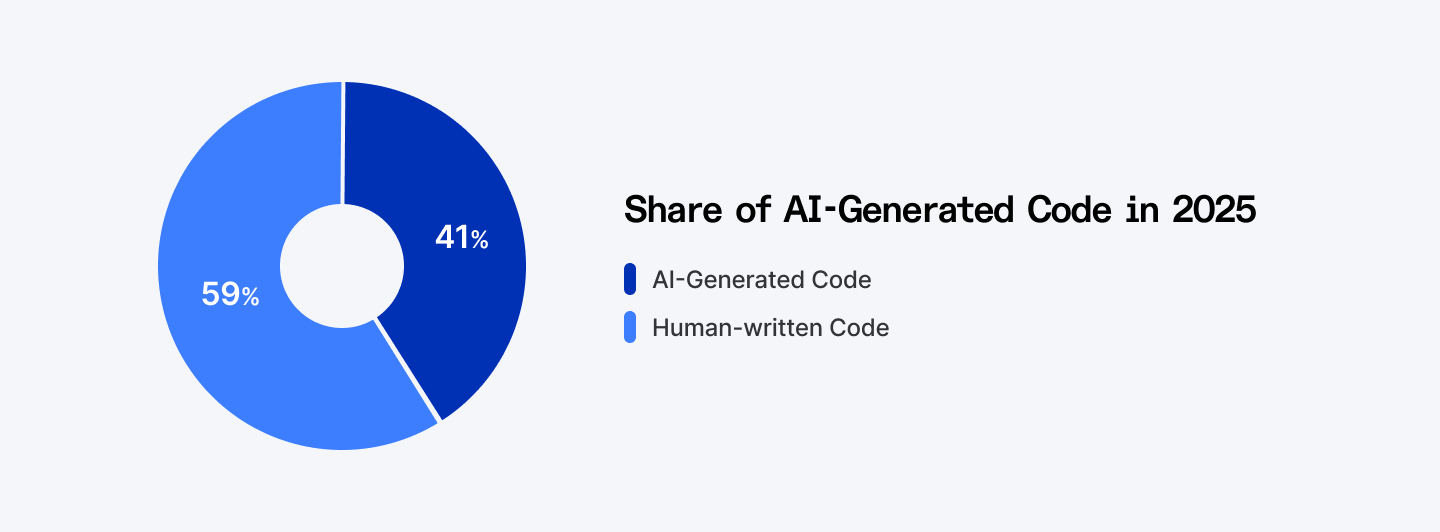
Most companies are more likely to adopt AI coding tools for code generation and refactoring because they remove manual steps directly from the development workflow. This trend is already visible in data: Surveys indicate that about 41% of code flowing through development workflows is now AI-generated.
That level of AI-generated code moves review work earlier in the development lifecycle, focusing on validating intent, correctness, and risk before merge rather than fixing issues after the fact.
As a result, teams tighten expectations around diff quality, test relevance, and clear ownership of AI-assisted changes.
AI agents for test generation tend to be adopted early, too, for the same reasons.
Teams use AI to reduce the manual effort of writing tests, which can increase coverage more quickly. However, failures still require human judgment to determine which tests protect intended behavior and which introduce noise.
Lastly, documentation and onboarding support reduce ramp-up time, so AI tools can fit well here. Natural language processing systems can summarize repositories, pull requests, and decisions so new engineers can review context without having to reconstruct it from scattered commits, PR threads, and tickets.
First, risk grows when unjustified over-reliance on AI tools leads to skill atrophy. This happens when engineers stop reasoning through changes before merge.
A second risk is that some teams may lean heavily on AI tools while others avoid them, leading to inconsistent usage patterns. This complicates cross-team reviews and shared libraries.
Lastly, hidden quality and security issues present another sharp edge.
One data point makes this clear. Studies report that roughly 45% of AI-generated code contains security flaws according to Veracode.
As such, risk can be pushed into review queues and incident response, which shapes the real-world impact of artificial intelligence on delivery reliability.
Tool evaluation fails when decisions focus on feature lists instead of how work actually moves through PRs, CI pipelines, and reviews. For that reason, the criteria companies use to evaluate and adopt AI tools tend to cluster around technical fit, workflow impact, and risk exposure.
These criteria map directly to how changes move through pull requests, validation pipelines, and production reviews.
Technical fit determines whether a tool holds up under real production constraints. At this level, the focus stays narrow and practical. Here are the core technical checks leaders rely on:
Even technically sound tools fail when they introduce friction into daily delivery work. For that reason, adoption criteria should focus on how tools behave inside day-to-day engineering workflows, such as:
Good governance determines whether AI adoption remains under control as usage scales. Here are the risk checks that guide long-term decisions:
AI adoption is not measured by usage alone. Instead, it is inferred by observing how delivery behavior changes under comparable conditions. Rather than counting prompts or tool activations, effective adoption metrics compare work completed with AI assistance to similar work completed without it. Of course, you need to do it across the same teams, pipelines, and review standards.
These comparisons help leaders determine whether AI affects KPIs like cycle time, review effort, defect rates, or delivery reliability.
Adoption shows up as a pattern of behavior. From what we've seen in The 2025 State of AI-Assisted Software Development report, it describes three tightly linked dimensions that explain whether AI is truly embedded in daily work:
Together, these signals show whether AI sits inside the workflow or remains optional.
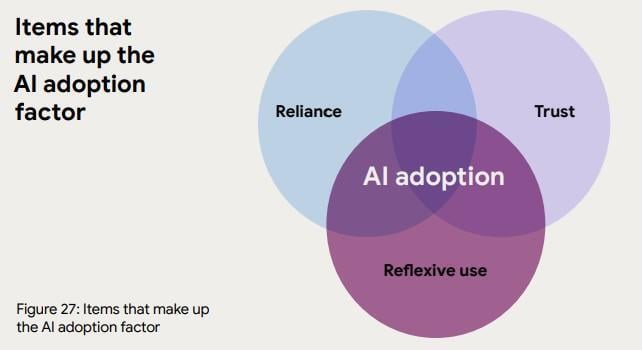 Source: State of AI-assisted Software Development 2025
Output metrics capture activity volume.
Commit counts rise, code diffs grow, and cycle time may appear shorter. However, these signals lose meaning when review queues lengthen, defects surface later in the release cycle, or senior engineers spend more time correcting AI-generated changes. In those cases, higher output reflects more activity, not more effective delivery.
Adoption metrics focus on behavior change inside the delivery pipeline.
Rather than counting usage events, they measure how work actually progresses from branch to merge to release. Feature access indicates availability, while adoption metrics reflect whether AI is relied on, trusted, and consistently embedded within real delivery steps.
To evaluate adoption in practice, leaders track a small set of workflow-level signals that reflect how AI is used inside real delivery work:
Taken together, these signals show whether AI is changing how work moves through development and release or simply increasing activity without improving delivery.
Tracking AI adoption works when signals reflect observable delivery behavior. Beyond that, we advise you to consider:
This is where Axify’s AI adoption and impact feature fits directly into your delivery system. Axify connects AI usage data with PR timelines, CI results, throughput, and quality signals. Then, it compares work completed before AI implementation with work completed after AI adoption.
That comparison makes adoption visible through your delivery KPIs. With that view, AI becomes a measurable change inside your engineering workflow.
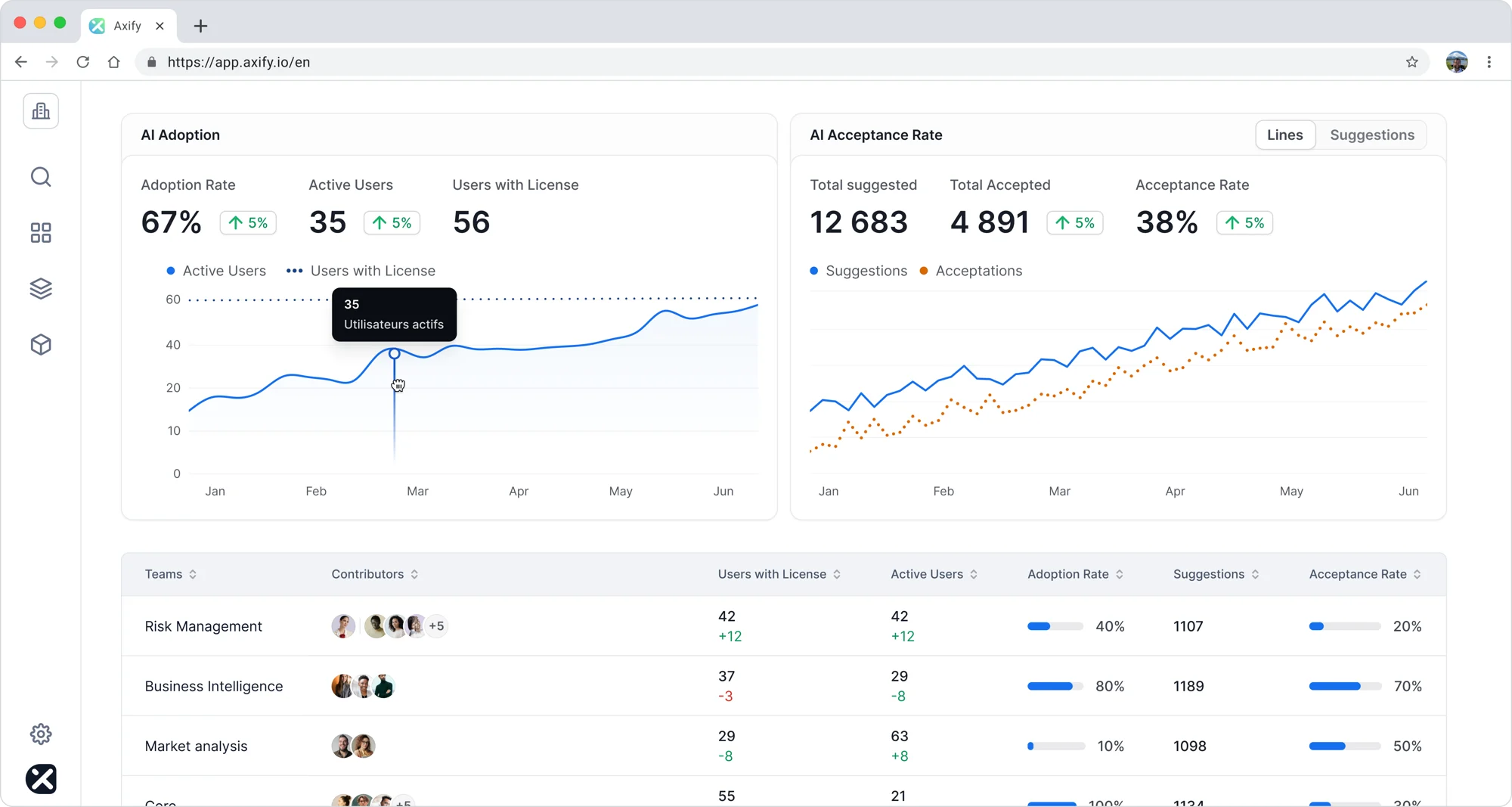
AI adoption inside engineering teams rarely fails because of tooling alone. More often, they appear when changes enter live workflows without clear checks on quality, risk, or decision ownership.
These are the challenges you usually face once experimentation turns into daily use.
Delivery pressure frequently pushes teams to shorten steps in PR review, testing, or validation before understanding the downstream effect. Faster code generation can shift review load to senior engineers, increase rework, or raise rollback frequency if guardrails stay unchanged.
Remember: We believe that AI tools amplify weaknesses as well as strengths. In practice, weak reviews, unclear ownership, or thin test coverage become more costly as output increases. Faster generation pushes effort into reviews, fixes, and rollbacks when validation cannot keep pace.
That effect becomes visible when certain delivery KPIs improve without corresponding gains in stability or quality.
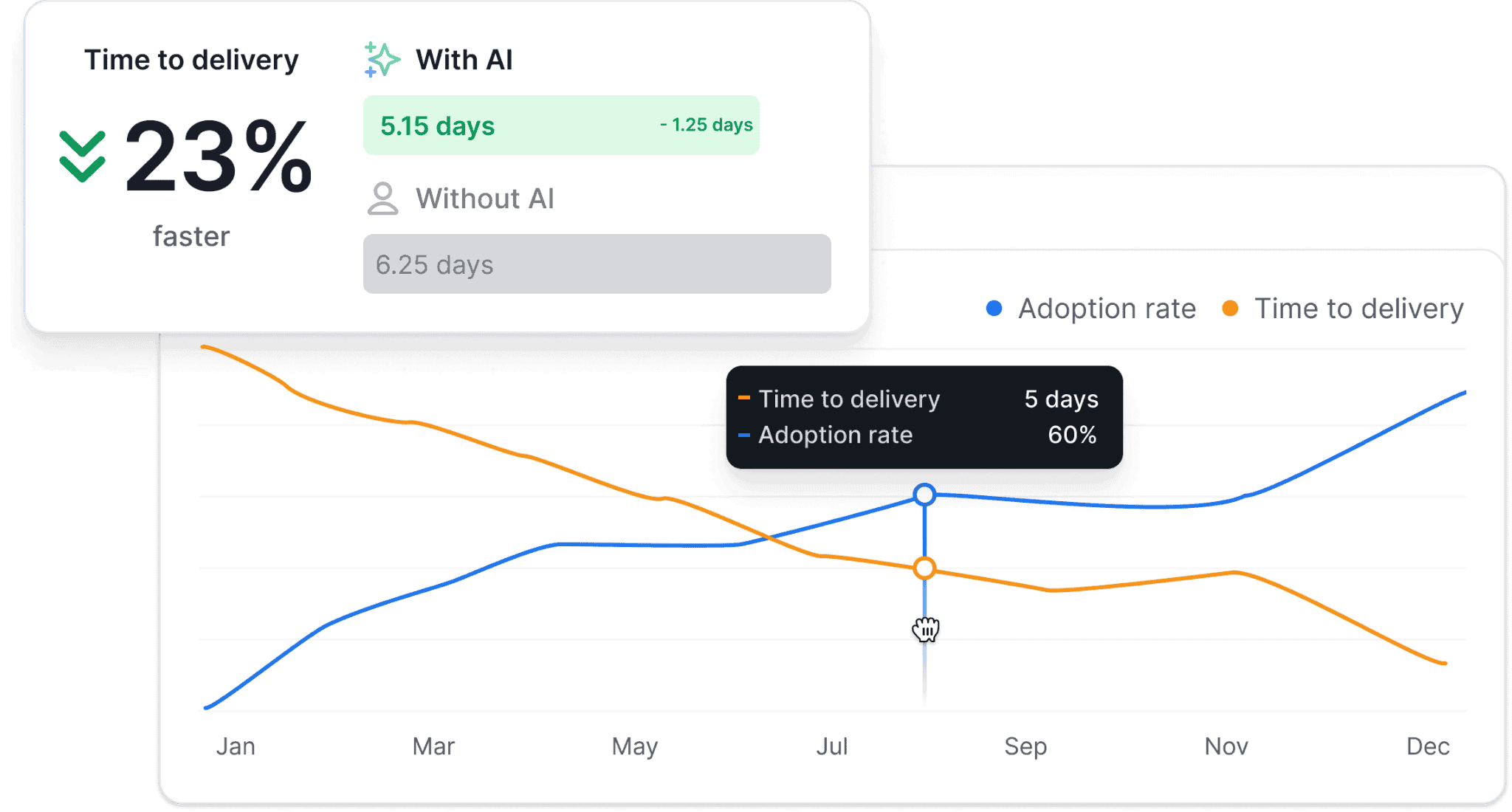
To measure whether acceleration improves or degrades delivery, Axify’s AI Impact feature compares work completed with and without AI under similar conditions. This allows changes in cycle time, rework, or rollback rate to be tied to actual behavior.
AI performance depends on context. When repository history, dependency structure, or workflow state fall outside the model’s context window, recommendations become incomplete or misleading.
Similarly, without visibility into test coverage gaps, ownership boundaries, or recent architectural changes, AI-generated suggestions lose precision and reliability.
Trust erodes when AI output cannot be explained or verified within normal workflows. As a result, engineers hesitate to rely on suggestions that bypass linting rules, violate patterns, or introduce unclear logic into shared code paths.
Resistance also increases when metrics feel punitive, such as tracking individual usage instead of team-level patterns tied to delivery behavior.
Linking AI usage to delivery impact remains difficult without controlled comparisons. License counts or the number of AI suggestions you approve do not explain whether fewer defects ship or whether lead time improves. This gap matters even more when you consider that 42% of organizations already struggle with inadequate financial justification (according to the Ingenuity of Generative AI report).
The impact of AI on software development only becomes clear when you compare similar work with and without AI across PRs, pipelines, and releases. Axify supports this analysis by isolating AI-assisted work and connecting it to delivery KPIs that reflect code quality, stability, and throughput rather than output alone.
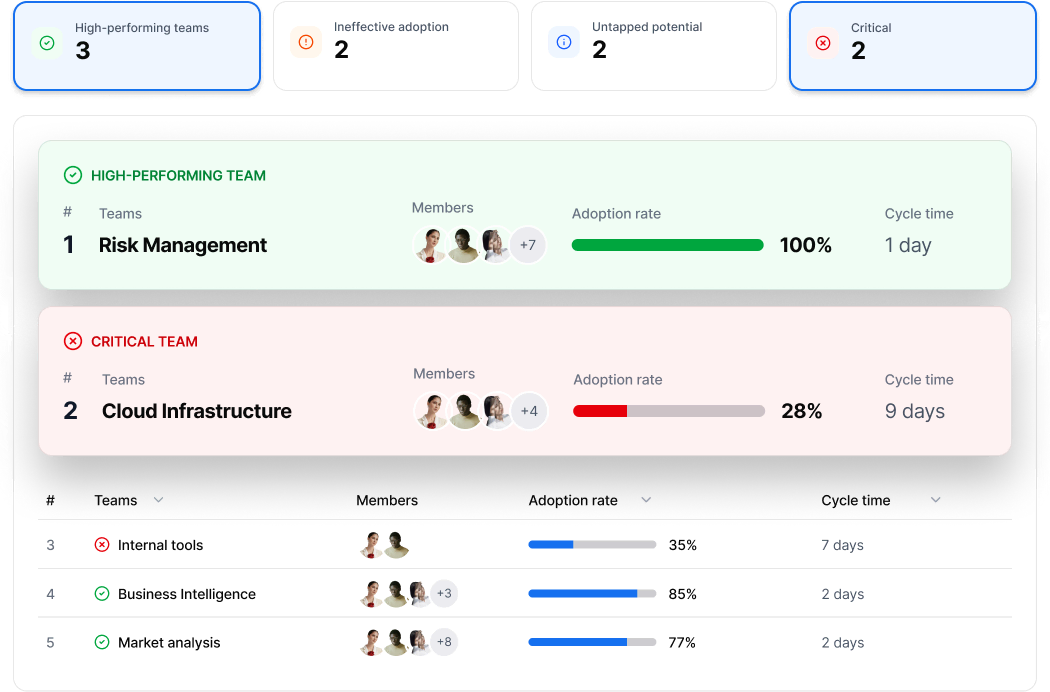
AI adoption resists the test of time when you make decisions based on clear delivery signals. With that in mind, here is a practical framework you can use to introduce, measure, and scale AI inside real engineering workflows without guessing or overcorrecting.
Every adoption effort should begin with where work already slows down. Bottlenecks usually show up in review queues, CI wait time, flaky tests, or unclear ownership during handoffs. Mapping those steps first gives you a baseline for comparison.
When friction is visible, AI has a defined role. Without that baseline, faster code generation typically shifts work downstream and increases rework rather than shortening delivery time.
Axify Value Stream Mapping tool can help you see those bottlenecks faster, and realize where implementing AI tools can make the most sense in your SDLC:
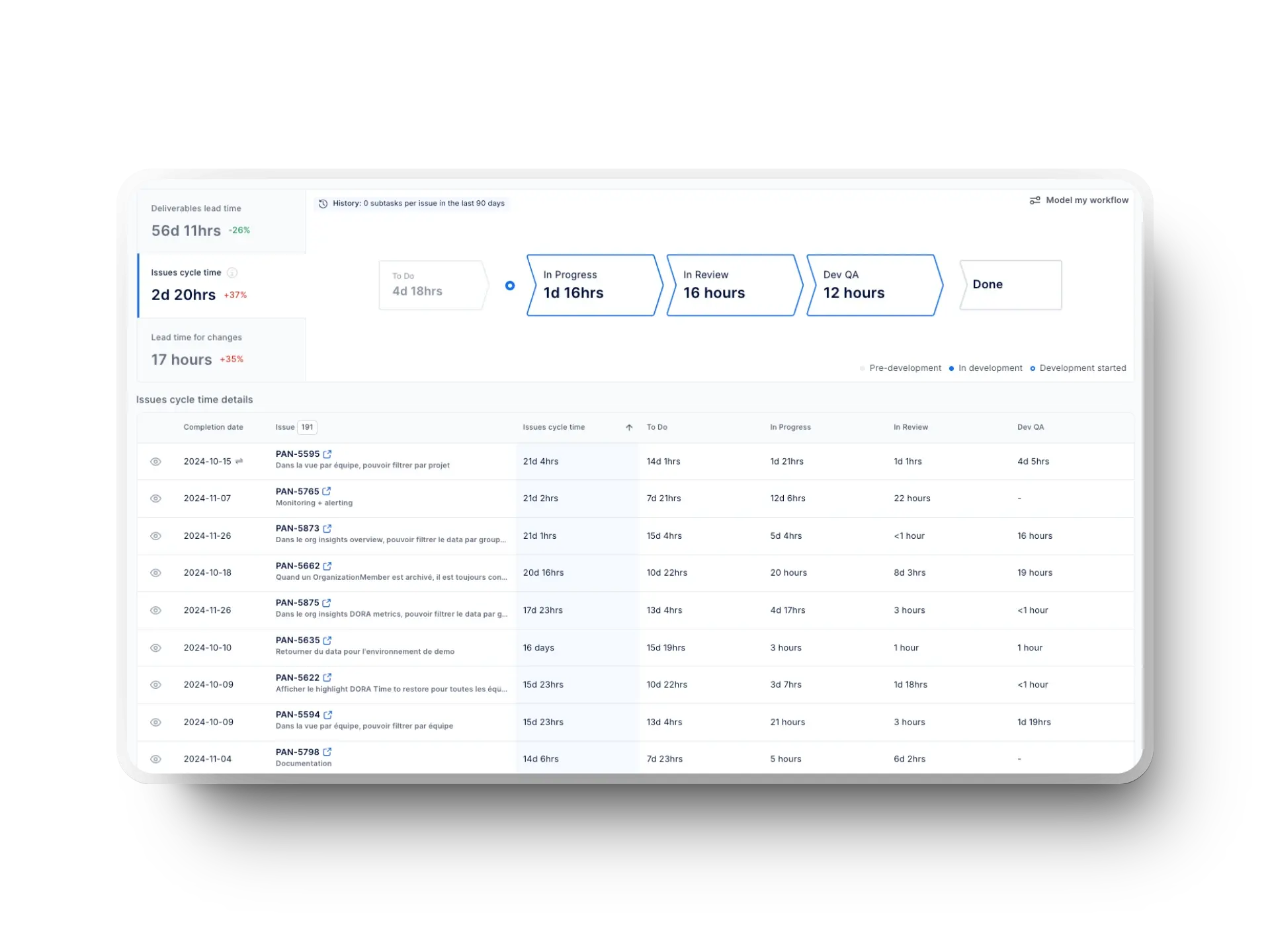
Pilots fail when success remains undefined. Before rollout, adoption needs an operational definition tied to behavior.
That definition should answer questions like whether AI-assisted pull requests move through review faster, whether defect rates change after release, or whether rollback frequency stays stable. Clear signals also set boundaries, such as which repos, teams, or stages are in scope.
With those guardrails in place, experimentation stays controlled instead of spreading unevenly across the organization.
Once a pilot starts, you must pick metrics that don’t simply capture the expected early usage spikes (caused by curiosity), and, instead, analyze actual long-term reliance.
As such, you will need to evaluate consistency across teams, depth inside the workflow, and durability over time.
Equally important, delivery impact should be measured alongside adoption. Comparing work completed with AI against comparable work completed without it inside the same pipelines shows whether cycle time, review effort, or rework actually change.
Pro tip: Check out our guide on the 17 best AI coding assistants to learn which tools can help you with this matter.
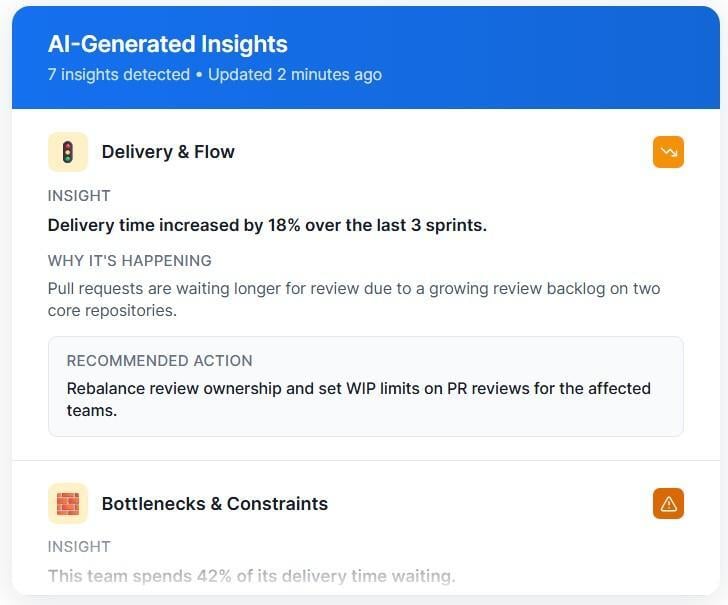
Metrics visibility is the first step; correct action based on them is equally important. When numbers move, the next question should always be why and what opportunities that brings.
In other words, you must connect changes in delivery KPIs to specific initiatives, tools, or process shifts. For example:
Axify’s AI-powered insights feature supports this step by analyzing delivery trends continuously and surfacing root causes. The system shows where time accumulates across code, review, test, and deployment steps, then links those shifts to changes in behavior.
Recommendations focus on what to adjust next, such as tightening review policies, limiting AI usage to certain stages, or standardizing tooling across repos. This approach helps you make better decisions based on metrics; other software engineering tools don’t offer you this option.
Scaling should follow evidence, not subjective factors like enthusiasm or industry benchmarks. When adoption signals remain consistent and delivery impact holds across multiple cycles, expansion becomes a low-risk step.
At the same time, tools that fail to change behavior should be removed quickly. Treating AI tools as experiments rather than mandates keeps trust intact and prevents long-term drag on delivery systems.
With this framework, AI adoption stays grounded in workflow reality, delivery signals guide decisions, and scaling happens only after measurable proof.
AI adoption inside engineering teams is entering a more constrained phase. Early expansion focused on access and experimentation, while the next phase centers on control, comparability, and long-term reliability. With that shift in mind, several patterns are already taking shape.
First, adoption is moving from tool proliferation to consolidation. Engineering organizations now face overlapping assistants, fragmented policies, and inconsistent review standards. As a result, consolidation has become an operational priority.
This shift shows up clearly in broader IT investment behavior. According to a Quickbase survey, 56% of respondents report spending more time and resources on IT consolidation. At the same time, 73% expect software investment to keep growing
This means consolidation does not signal less tooling. Instead, it reflects a tighter selection and fewer parallel systems competing inside the same workflow.
Governance is also moving closer to the workflow itself. Policies defined outside the delivery path tend to arrive late and get bypassed under pressure. When guardrails sit directly inside PR checks, CI validation, and access controls, compliance becomes embedded in your current work.
|
"Embedding governance into the workflow from the start rather than adding it afterward allows teams to innovate confidently,” |
Over time, this shift pushes AI toward infrastructure status. Instead of being treated as an optional productivity layer, AI becomes something teams depend on in predictable ways. That dependence increases scrutiny around failure modes, rollback paths, and auditability, especially as AI-assisted changes reach production more frequently.
From Axify’s perspective, we see this transition as a necessary correction.
As we said above, we see AI as an amplifier rather than a fix. Let’s remember that AI increases throughput where collaboration, review discipline, and architecture already hold up. At the same time, it exposes weak ownership models, shallow testing, and overloaded reviewers faster than before.
AI can make certain work stages faster, but that localized speed does not automatically improve global delivery speed. Code creation usually accelerates first, while code editing, review, and validation typically take longer as volume increases. This pattern shows up clearly in our guide about the impact of AI on software development, where faster generation shifts effort downstream instead of removing it.
That shift contributes to what many teams experience as a productivity illusion. Activity increases, but delivery efficiency does not improve at the same rate.
Our article on AI coding assistants shows how these tools shift where time is spent across the workflow. The analysis explains why time saved during code creation often reappears in review and rework.
AI also acts as a double-edged tool inside engineering systems. This tension is described directly in our guide on AI and developer productivity, which notes:
These outcomes explain why training becomes a differentiator over time. Engineers who learn how to guide AI output, validate suggestions, and apply results within existing review and testing standards continue to improve.
Others plateau once initial speed gains taper off.
For that reason, Axify encourages upskilling tied to review quality, test coverage, and ownership discipline rather than prompt volume.
Finally, we encourage tracking AI adoption metrics and running controlled performance comparisons before and after AI implementation. Comparing work completed with AI against comparable work completed without it keeps decisions grounded in delivery behavior.
That approach supports deliberate adoption that remains reversible and aligned with how software actually ships.
AI adoption breaks down when changes in delivery behavior stay invisible to you. Without clear signals, activity looks high while review load, rework, or pipeline delays quietly increase. Because of that gap, visibility into real workflows becomes the control point.
With the right instrumentation, workflow data shows where AI shortens PR cycles, where it adds review overhead, and where it gets ignored after rollout. Those signals appear inside commits, pull requests, test runs, and deployments rather than in license counts.
Axify supports this approach by showing how work actually flows before and after AI tools enter the stack. Impact is measured across assistants like GitHub Copilot, Cursor, Claude Code, and others, with breakdowns by tool, team, and line of business.
For example, if you are testing Amazon cursor AI tool adoption, Axify lets you compare delivery behavior before and after rollout, without relying on anecdotes or surveys.
If sustained adoption matters to you, then contact Axify to see delivery behavior clearly.
AI adoption typically takes 3-9 months before it shows up in delivery behavior you can rely on. Early usage appears within weeks, but consistent use inside PRs, reviews, and pipelines takes longer. Sustained adoption only settles once teams trust the output and stop treating tools as optional.
AI adoption stalls when pilots measure activity instead of delivery behavior. Usage spikes during trials, but fades once review load increases or quality issues surface. Without clear success criteria tied to cycle time, rework, or defects, pilots never turn into standards.
AI tool sprawl is prevented by limiting tools to approved workflows with shared ownership and exit paths. Central visibility into where tools are used across repos and teams keeps comparisons grounded. Without that visibility, teams drift into parallel setups that cannot be evaluated side by side.
AI adoption works best when direction is set top-down and usage is shaped bottom-up. Leadership defines guardrails, metrics, and rollback rules, while teams validate fit inside real workflows. Either approach alone leads to resistance or fragmentation.
Early warning signs include uneven usage across teams, longer PR reviews, and rising rework despite faster code creation. Another signal appears when senior engineers spend more time correcting output than before. Those patterns indicate activity without behavior change.